


Plumbing
Rough in, drainage and venting settled before the walls close, with the plumbing itself carried out by licensed trades.
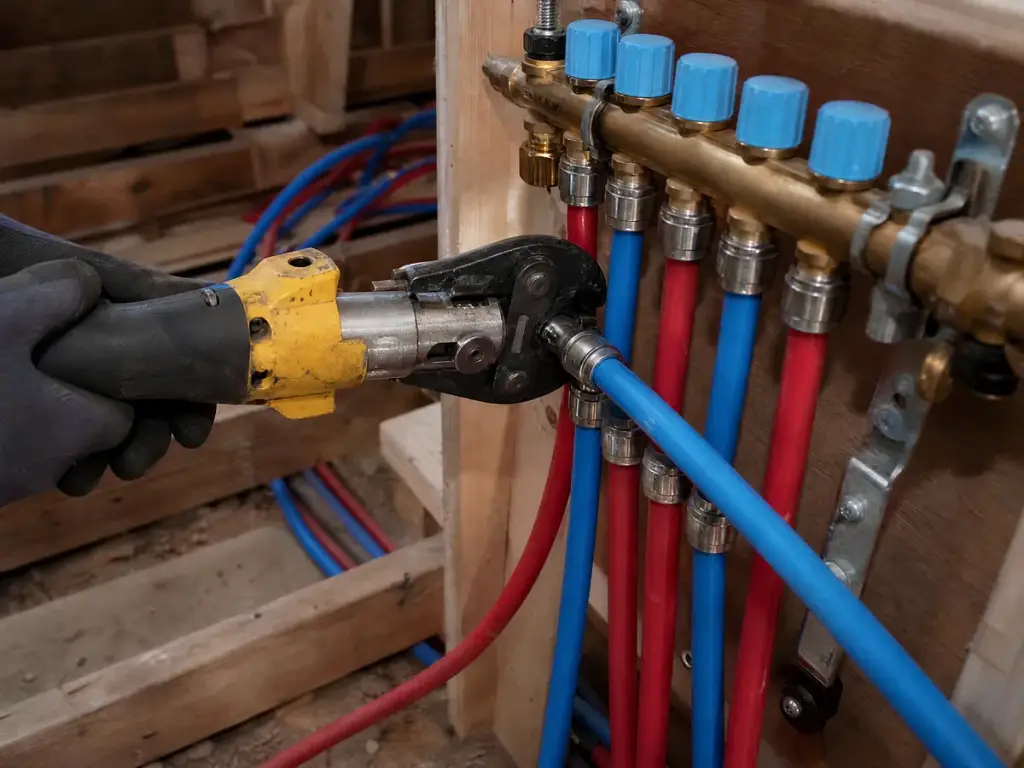
Plumbing as part of the renovation
Pipe is the first thing into a wall and the last thing you see. Rough in happens while the framing is open, gets tested, and only then does the board go on.
Licensed trades carry out the plumbing work that requires them. Our part is to coordinate that trade into the renovation schedule and carry the building work around it: opening walls, drilling where the structure allows, then closing up.
Copper still gets used where a line is exposed or takes heat. PEX is pulled through studs and joists for long branches, because it bends instead of needing a fitting at every corner.
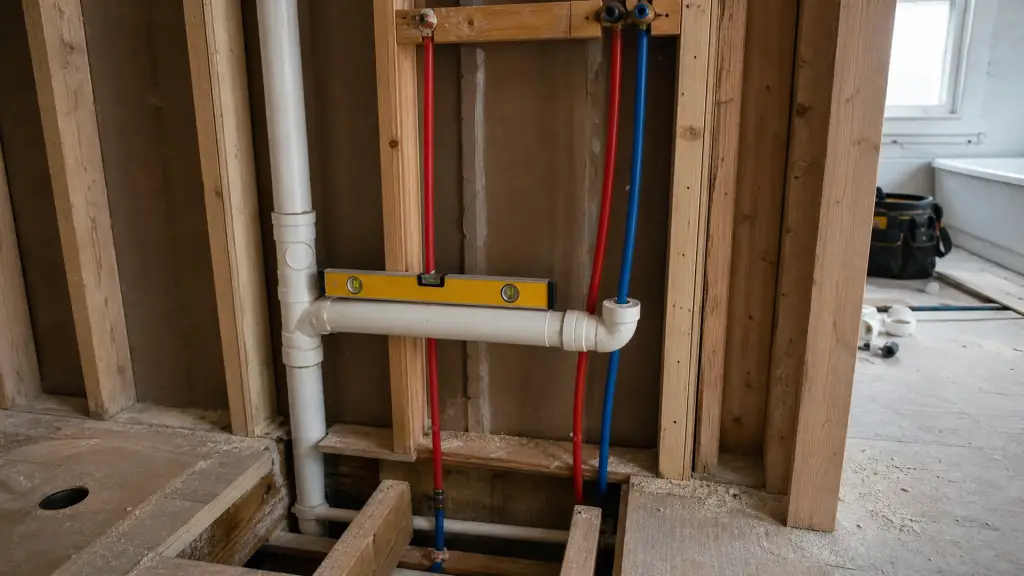
Drains, vents and the gurgle that gives them away
Every drain has a trap holding a plug of water that keeps sewer gas out of the room. Each trap needs a vent, so draining water pulls air from the vent instead of the trap. Without one the trap gets siphoned, and you hear it: a gurgle at one fixture while another empties.
The trap arm, the horizontal piece between trap and vent, has limits on length and fall. Slope matters both ways: too flat and solids sit in the pipe, too steep and the water runs off and leaves them behind.
Moving a fixture is rarely just moving a fixture. Shift a toilet a couple of metres and the drain below has to be re-run at the right slope, the vent picked up again, and the joists decide what is possible.
- A sink that gurgles when the tub or the washing machine empties
- A drain still slow after the trap has been cleared
- A fixture you want somewhere it has never been
- No shut off under a sink, so one repair takes the whole house offline
- A floor drain that backs up in a heavy summer storm
How we do it
Set the fixtures against the structure
Where the stack sits, which way the joists run and what can be re-routed decide what the layout can do.
Open up and look
Older Toronto houses hide galvanized supply, cast iron stacks and the occasional lead service. What is behind the wall changes a plan more than anything on paper.
Rough in and test
Supply and drainage go in, get tested and are inspected where required, with an isolating valve at every fixture.
Trim out and close up
Fixtures are set and connected by the licensed trade. We finish the surfaces around them, check underneath while the water runs, and clear the site.
What is included
A vent for every trap
Nothing is connected in a way that leaves one fixture breathing through another.
Slope on the horizontal
Drain runs set to the fall that carries solids rather than stranding them.
Isolating valves
A shut off under each sink and at the toilet, so a repair stays local.
Tested before closing
Supply held under pressure and drainage checked while everything is reachable.
Freeze protection
Pipe kept out of exterior wall cavities where possible, and hose bibs given an indoor shut off and a drain point.
Below grade drainage
Where a fixture sits below the drain, a sealed pump basin is planned in, and a backwater valve considered against storm backups.
What affects the cost
Pipework is priced by how far water and waste have to travel and what stands in the way.
- Whether fixtures stay put or move, and how far they sit from the stack and the vent
- Whether a concrete floor has to be cut and made good for a basement drain
- Whether a pump and a sealed basin are needed because the drain sits high
- Whether old galvanized supply or a lead service is replaced while the wall is open
- Fitting a backwater valve, which means breaking the floor and working around the main
- Water heater choice, since a tankless unit needs its own venting and a gas line sized for it
Who else is in that wall
Pipe seldom moves by itself.
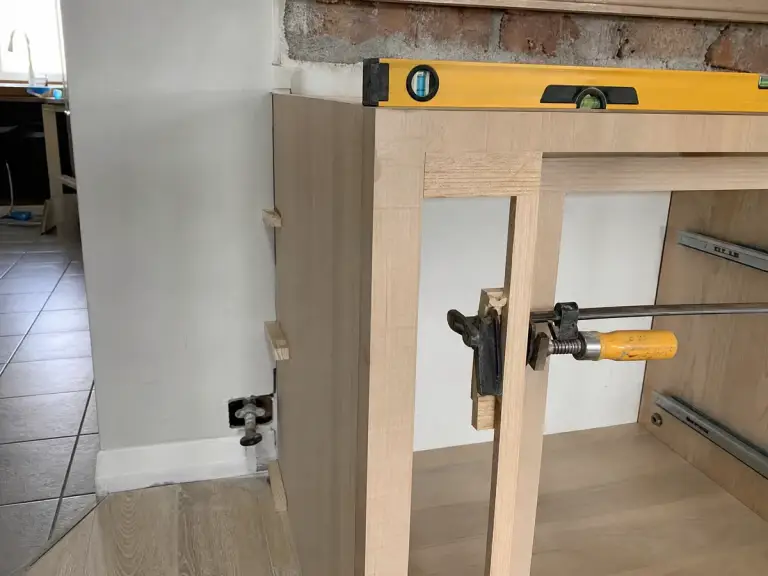
Kitchen
Sink position, the dishwasher tail piece and a water line to the fridge are fixed at rough in.
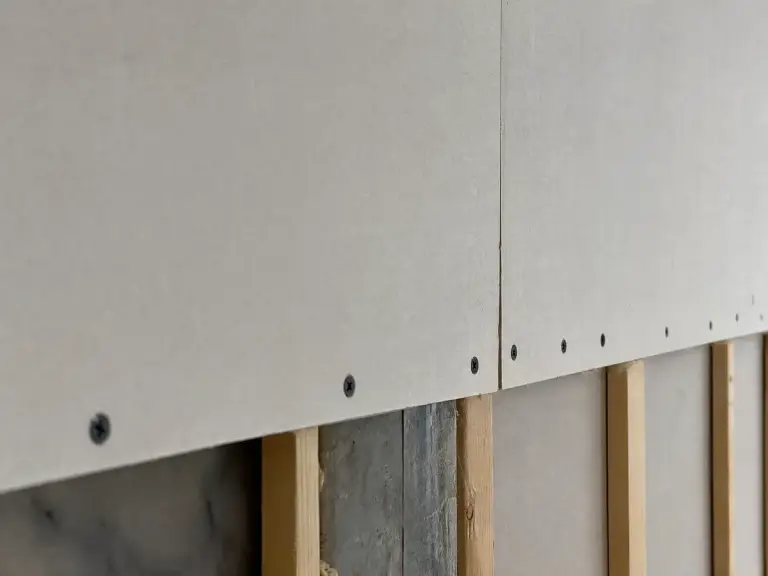
Drywall
Walls opened for pipe have to be closed again, with moisture resistant board where a room stays humid.
Electrician
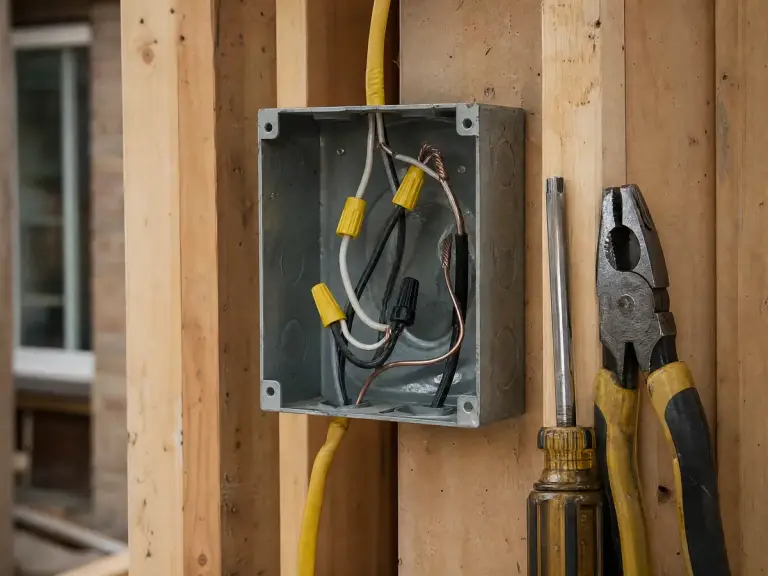
A pump, a tankless unit and in floor heat each need power in the right spot.
Recent renovation work
Plumbing and the other trades we run inside a house. Tap any photo to see it larger.
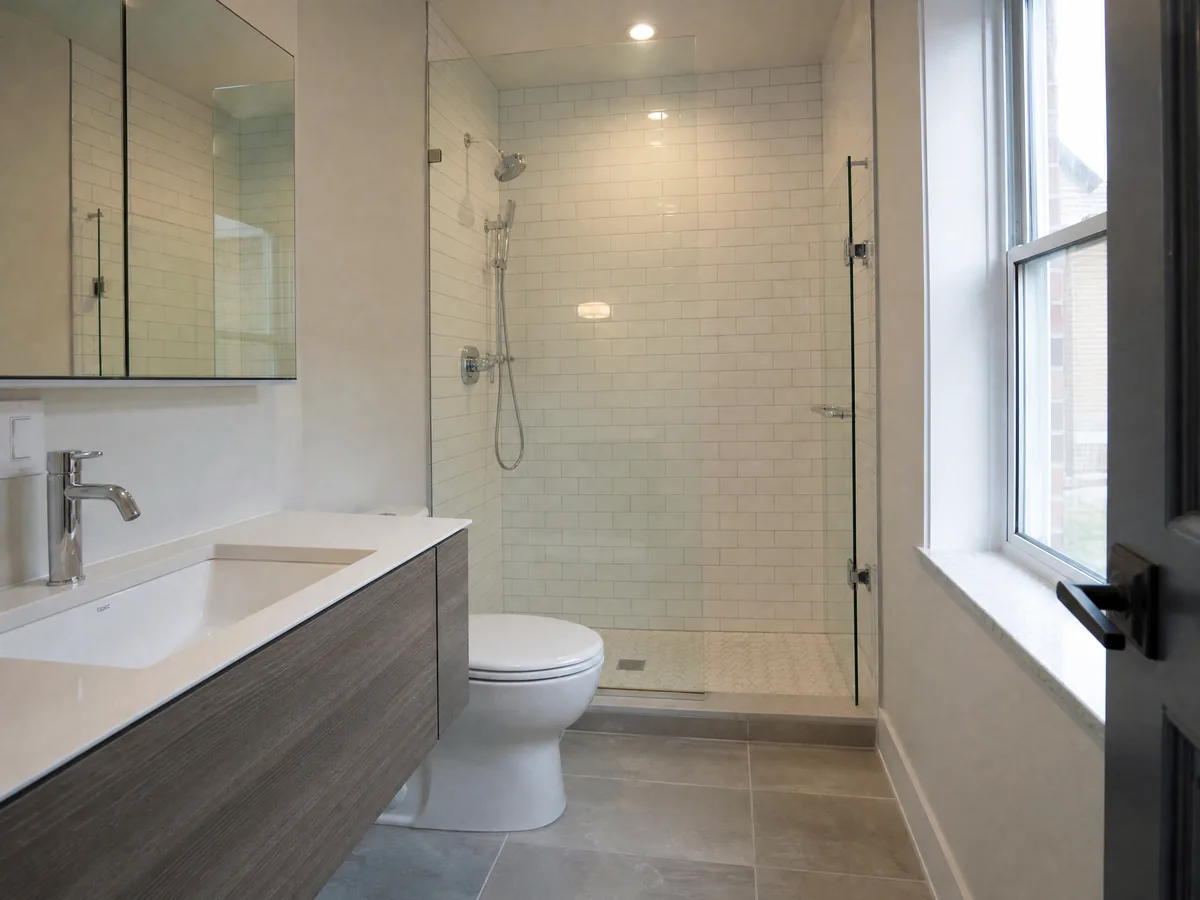
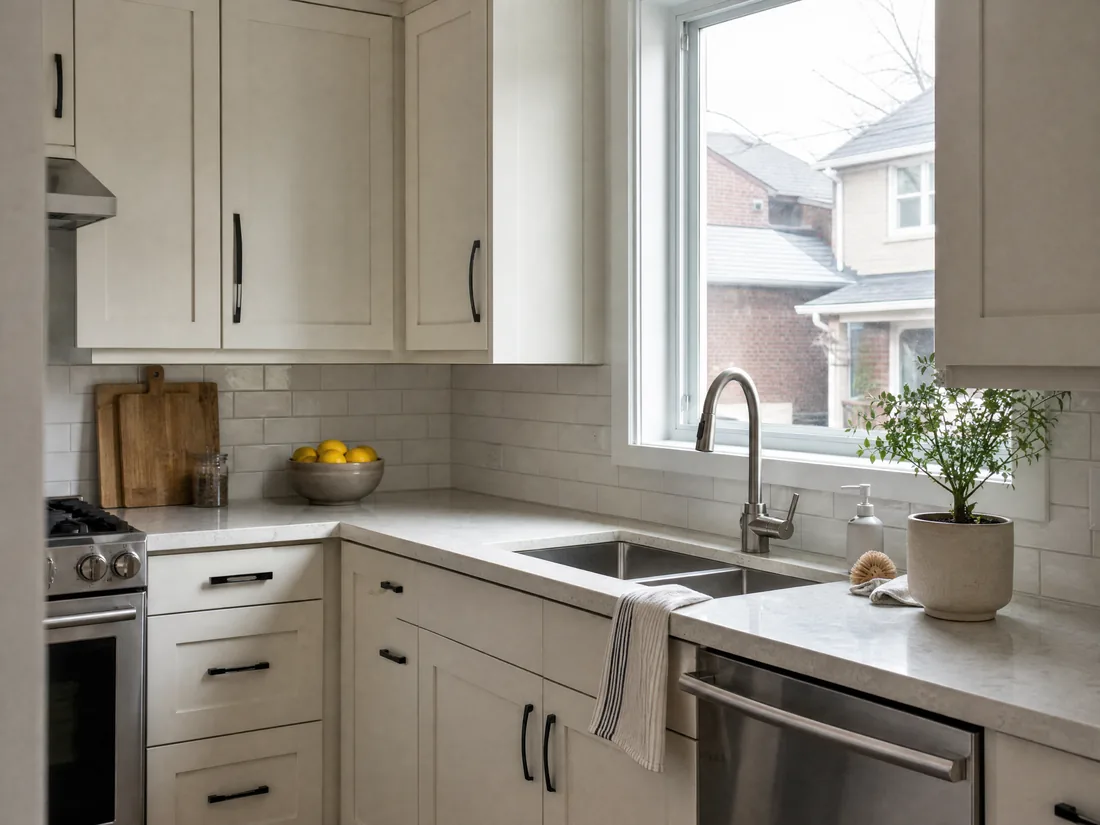
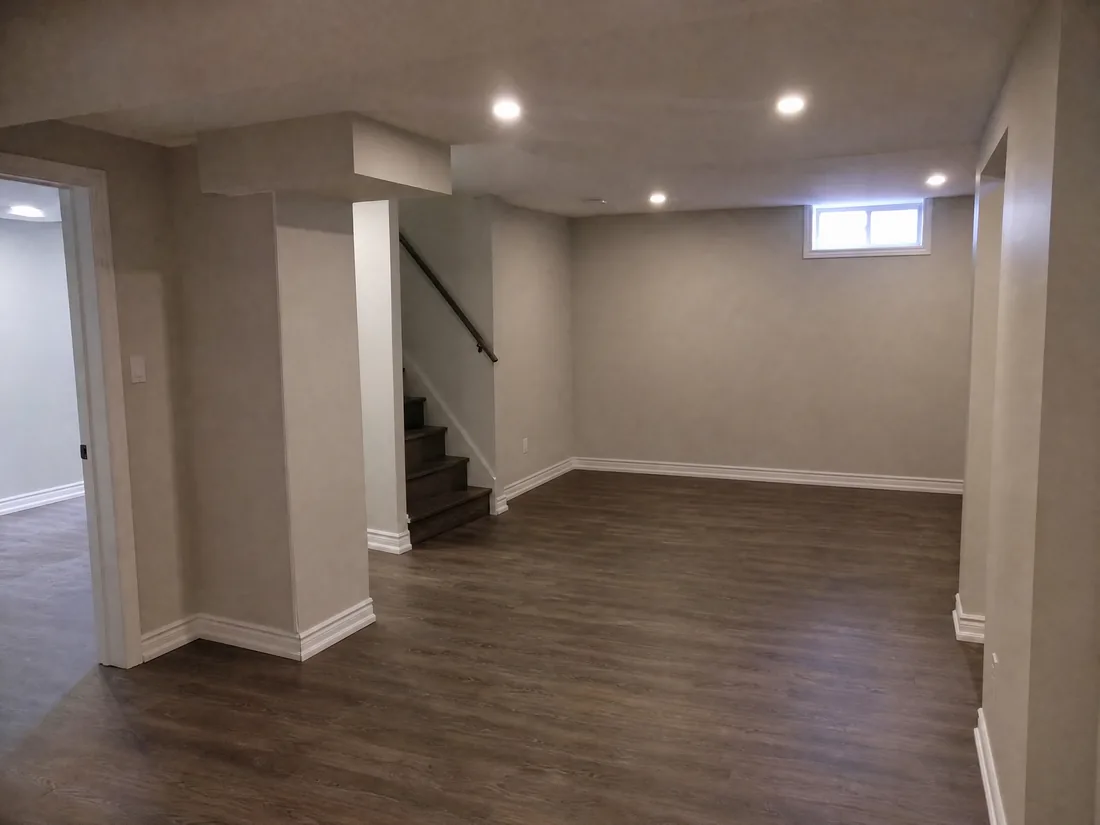
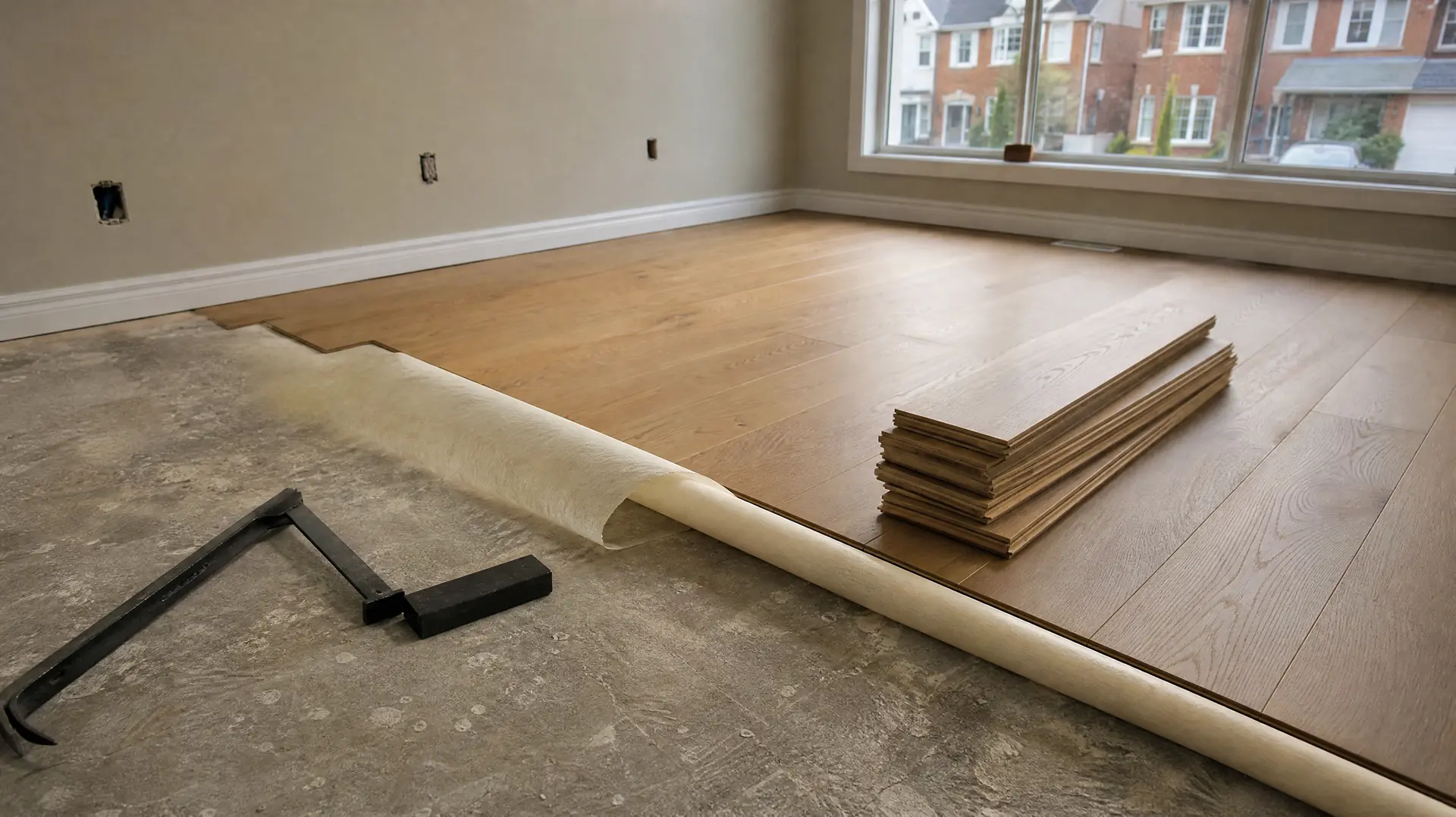
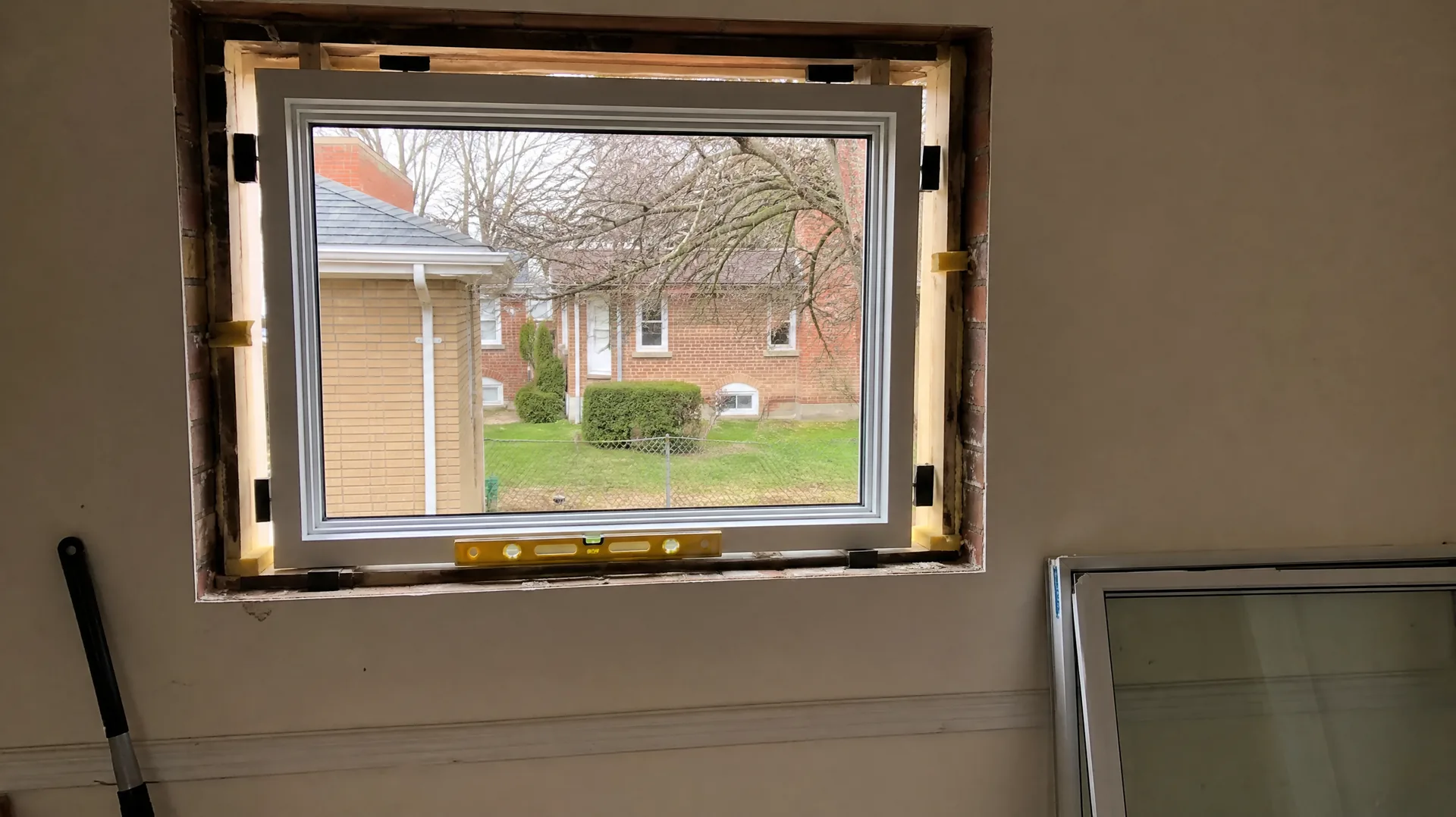
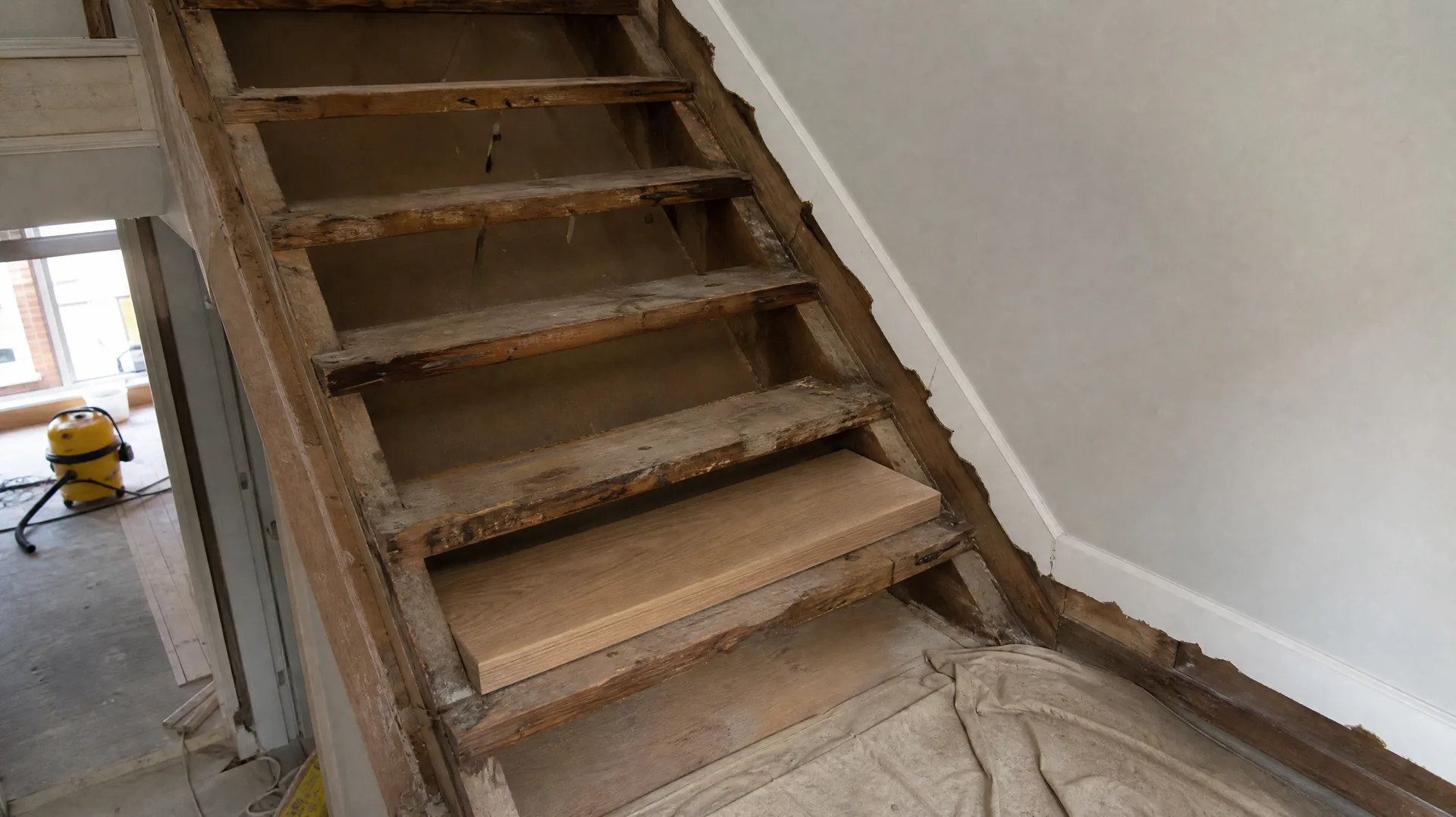
No photographs in this set yet.
Questions homeowners ask
Air is being dragged through the sink trap because the system cannot get it anywhere else. The vent on that branch is usually undersized, too far from the trap or partly blocked. Every gurgle takes a little of the trap seal with it.
Yes. Waste collects in a sealed basin and a pump lifts it to the existing drain, a sewage ejector where there is a toilet or a smaller unit for a sink and shower. The basin is vented like the rest of the system.
Look at the pipe entering the basement ahead of the meter. Lead is dull grey and soft enough to scratch with a coin, while copper is penny coloured and galvanized steel is threaded. The City handles its side of the line, and the part from the property line into the house belongs to the owner.
A tank stores hot water and refills after it is drawn down, so a long shower can outrun it. A tankless heats on demand and never runs out, but it wants a larger gas supply, its own sealed venting and descaling in hard water. Where that venting can go often decides it.
Get a free quote
Tell us which fixtures are moving and where. We work back from the drain.
Talk to us
Tell us the address, what the problem is and when you would like the work done, and we will come back to you with a written quote. If it is easier to talk it through, the phone is the fastest route.
Get the pipe right the first time
Book a look at the layout before the framing closes.