


Concrete driveways, steps and foundations
Flatwork, porches and foundation repair for Toronto houses, mixed and finished for a climate that freezes and thaws all winter.
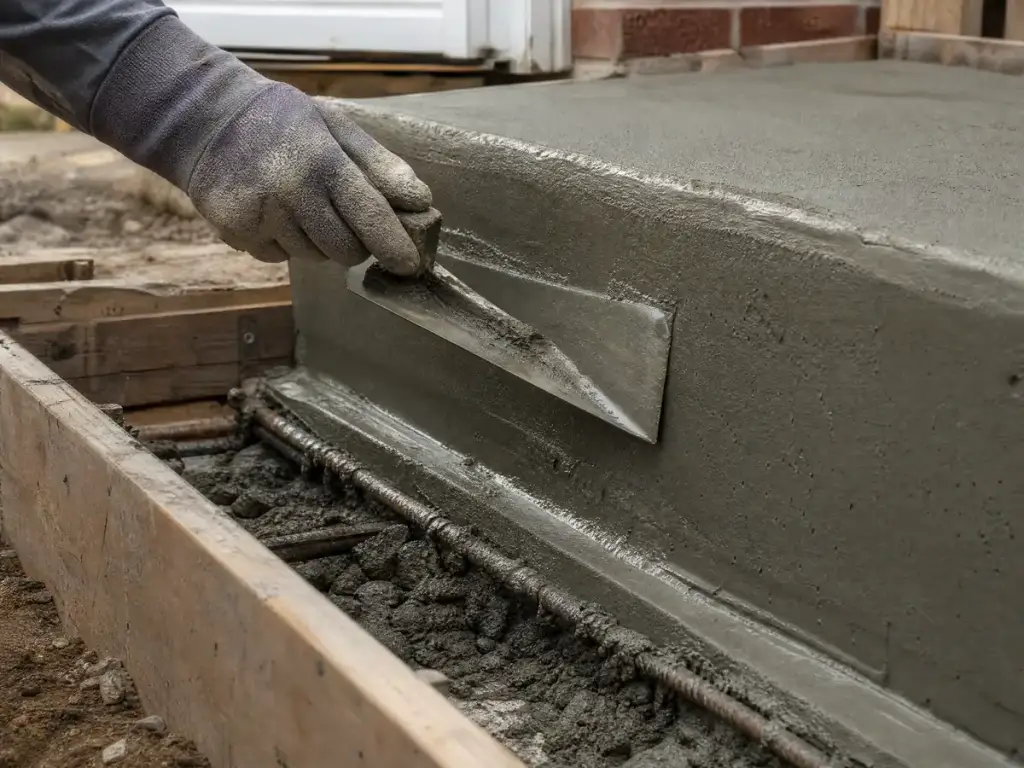
Most concrete failures are decided before the pour
Concrete is strong in compression and weak in tension. That one fact explains why a slab is reinforced, why it sits on a compacted granular base, and why it is given control joints to crack along instead of cracking where it likes.
Here the mix carries an extra requirement. Air entrainment puts microscopic bubbles through the concrete, giving freezing water somewhere to expand into instead of forcing the paste apart. A slab poured without it can look fine for a season, then scale away in sheets the first winter salt reaches it.
What sits under the slab matters as much as the slab. Granular fill compacted in layers, drained and taken to the right depth, stops the settlement that snaps flatwork in half.
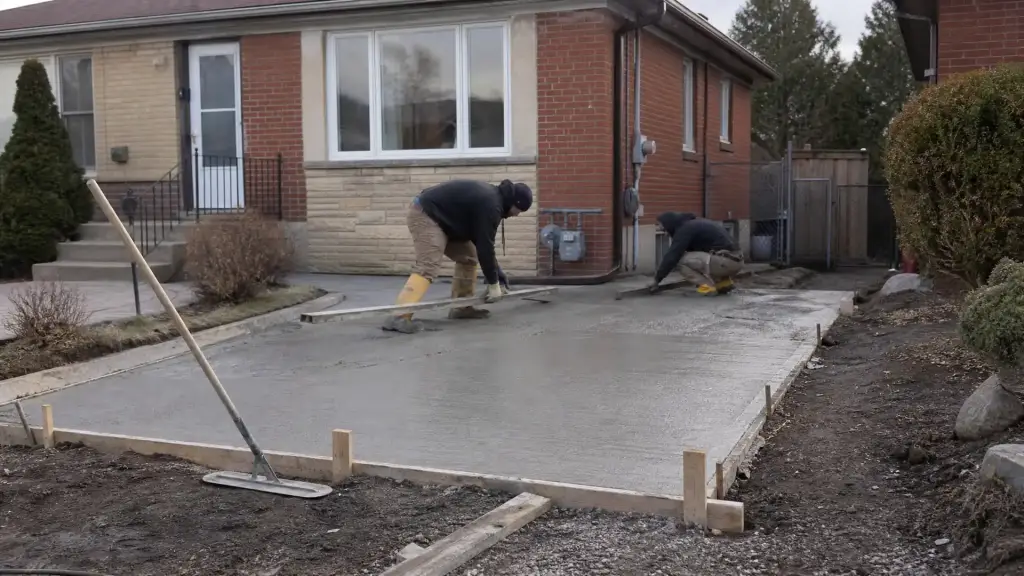
What to look at on your driveway, steps and foundation
Some of this is cosmetic. The rest is telling you water is moving where it should not, and water against a house is never a small subject.
The foundation signs come first. Water pooling by a wall finds the first cold joint it meets, and a slab settled back toward the house feeds that path.
- A surface flaking, pitting or dusting, worst nearest the road
- Cracks wide enough to take a coin, or one side sitting higher than the other
- Slabs pitched back toward the house, or a puddle standing by the foundation
- Steps that rock, pull away from the porch, or have lost a front edge
- A gap opening between the garage floor and the wall
- Parging coming off the foundation in sheets
- Window wells packed with soil, sitting higher than the basement sill
How we do concrete work
Levels and layout
We set the finished height and the fall before anything comes out. Flatwork has to carry water away from the house.
Break out and dig
The old slab comes out with any root, soft ground or rubble under it. For porches and steps the dig goes below the frost line so the footing is not lifted each winter.
Base, forms and steel
Granular fill is compacted in layers, not dumped in one lift. Forms are set to the lines, and reinforcement is chosen for the load the slab carries.
Place, finish and joint
The concrete is placed, screeded, floated and finished to the texture you chose. Control joints are cut so the shrinkage crack lands in a straight line where it was planned.
Cure and protect
New concrete is kept wet or covered. A Toronto summer dries the top of a slab faster than it gains strength, and a surface dried too fast stays weak where salt lands.
What concrete work covers
Driveways
Replacement, widening and extensions, in broom, exposed aggregate or stamped finish.
Walkways and landings
Front paths, side entrances and the landing at the foot of a stair run.
Porches and steps
Poured steps and porch slabs on proper footings, with nosings shaped to shed water.
Garage pads
Slabs built for vehicle load, with the fall running out through the door.
Foundation repair
Cracks, cold joints and spalled areas cut back and made good.
Parging
The exposed face of a foundation patched or recoated where the old coating has blown.
Window wells
Wells reset, drained and lifted above soil level so they stop filling.
Footings
New footings for steps, porches and columns, sized for load and taken below frost.
What affects the cost of concrete work
Concrete is priced on what has to come out, what goes underneath and how hard the pour is to reach.
- Volume and thickness. A driveway taking vehicles is thicker and more heavily reinforced than a path.
- Depth of dig. Footings below frost, and bad ground under an old slab, mean more excavation.
- Truck access. A pour chuted off the mixer is quickest. Barrowing or pumping is not.
- Finish. Broom is plain. Exposed aggregate, stamping and colour through the mix add labour.
- Timing. Work at either end of the pouring season may need blankets or heated water.
- Drainage alongside it. Regrading or a new window well is a separate piece of the visit.
Often part of the same job
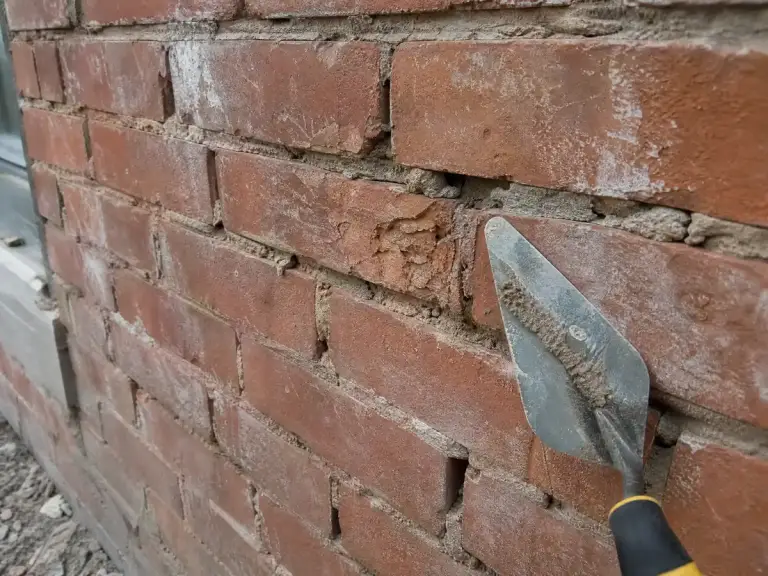
Brick
Where a porch or slab meets brickwork, the masonry above usually wants attention in the same visit. Open joints keep water in the wall.
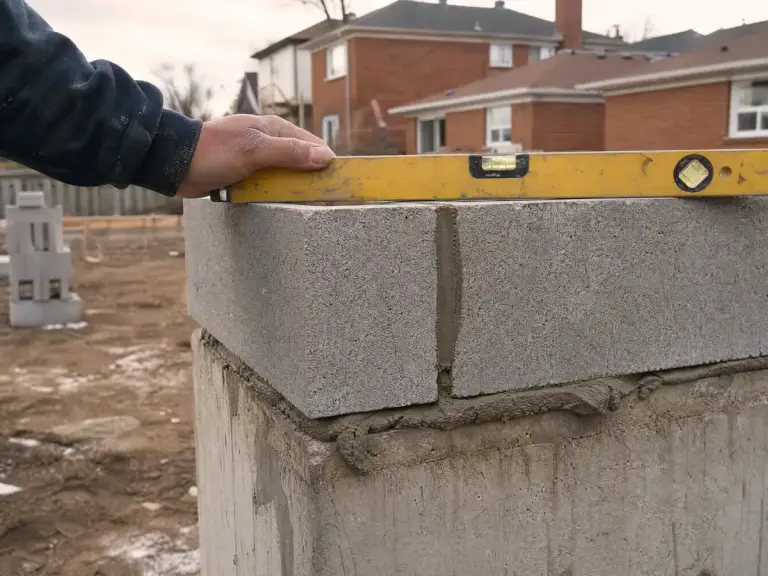
Blocks
Foundation and retaining walls are built in block. What the concrete around them does with water decides how they age.
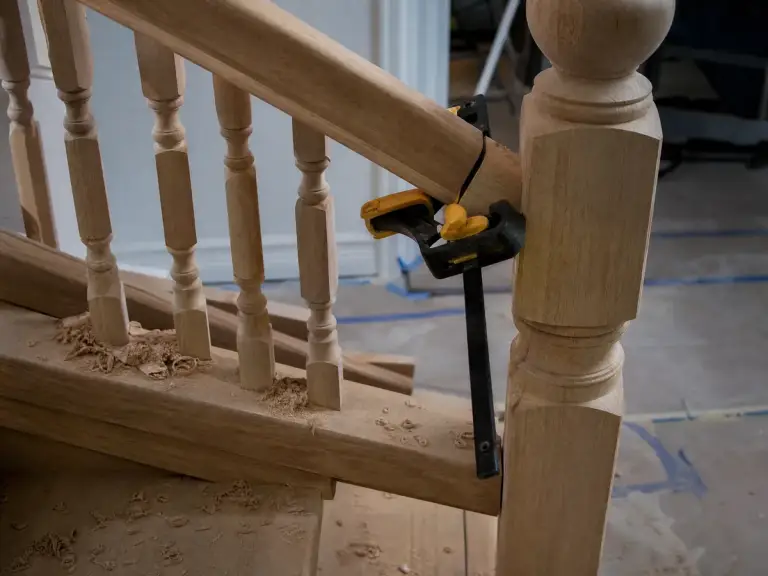
Stairs
Outside steps often lead straight to an interior run. Treads, risers and railings indoors are a different trade.
Recent concrete work
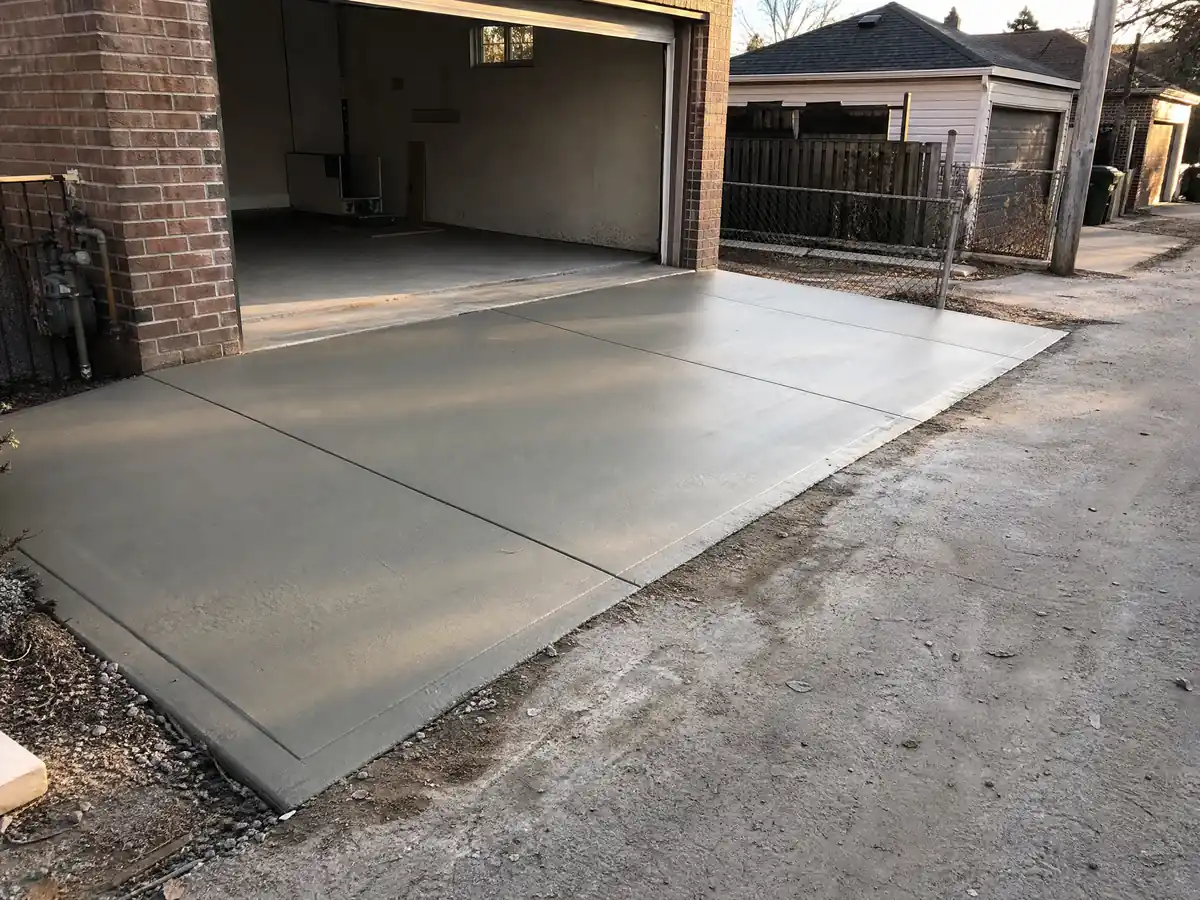
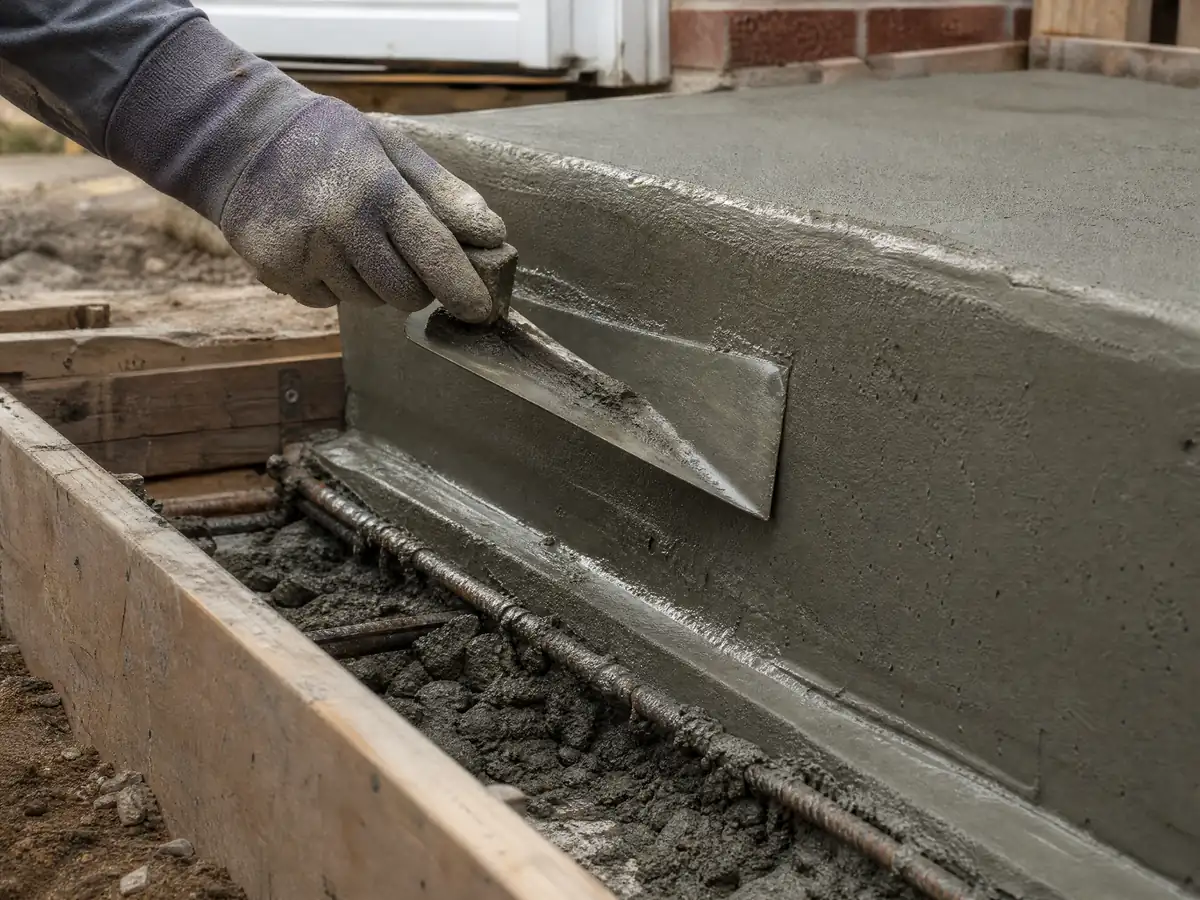
A few from the gallery. Tap any photo to see it larger.
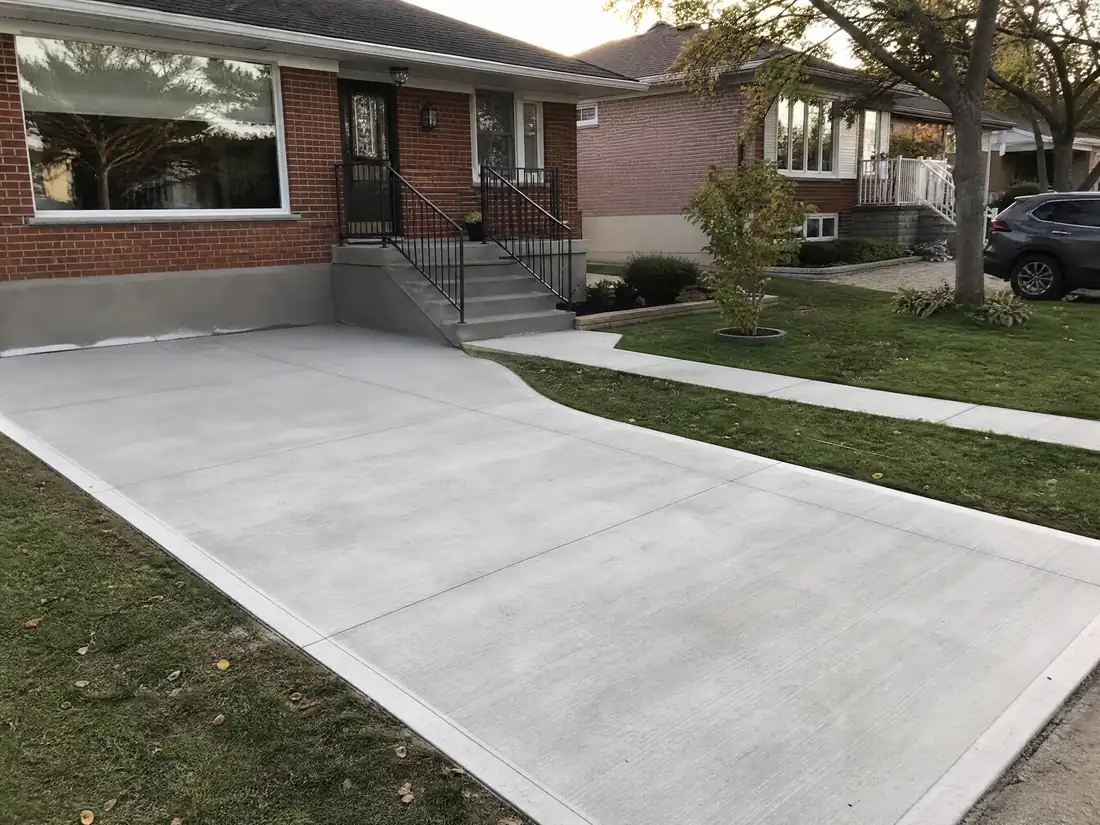
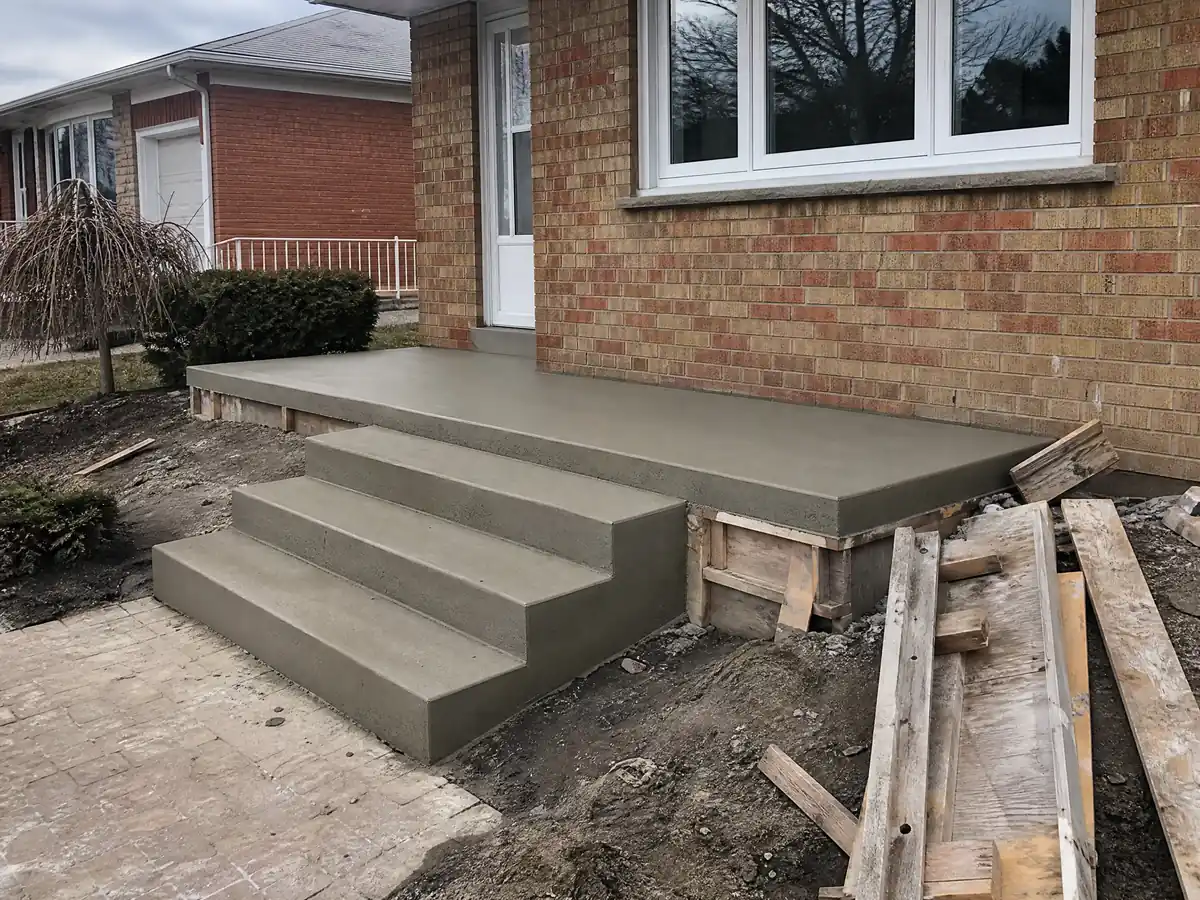
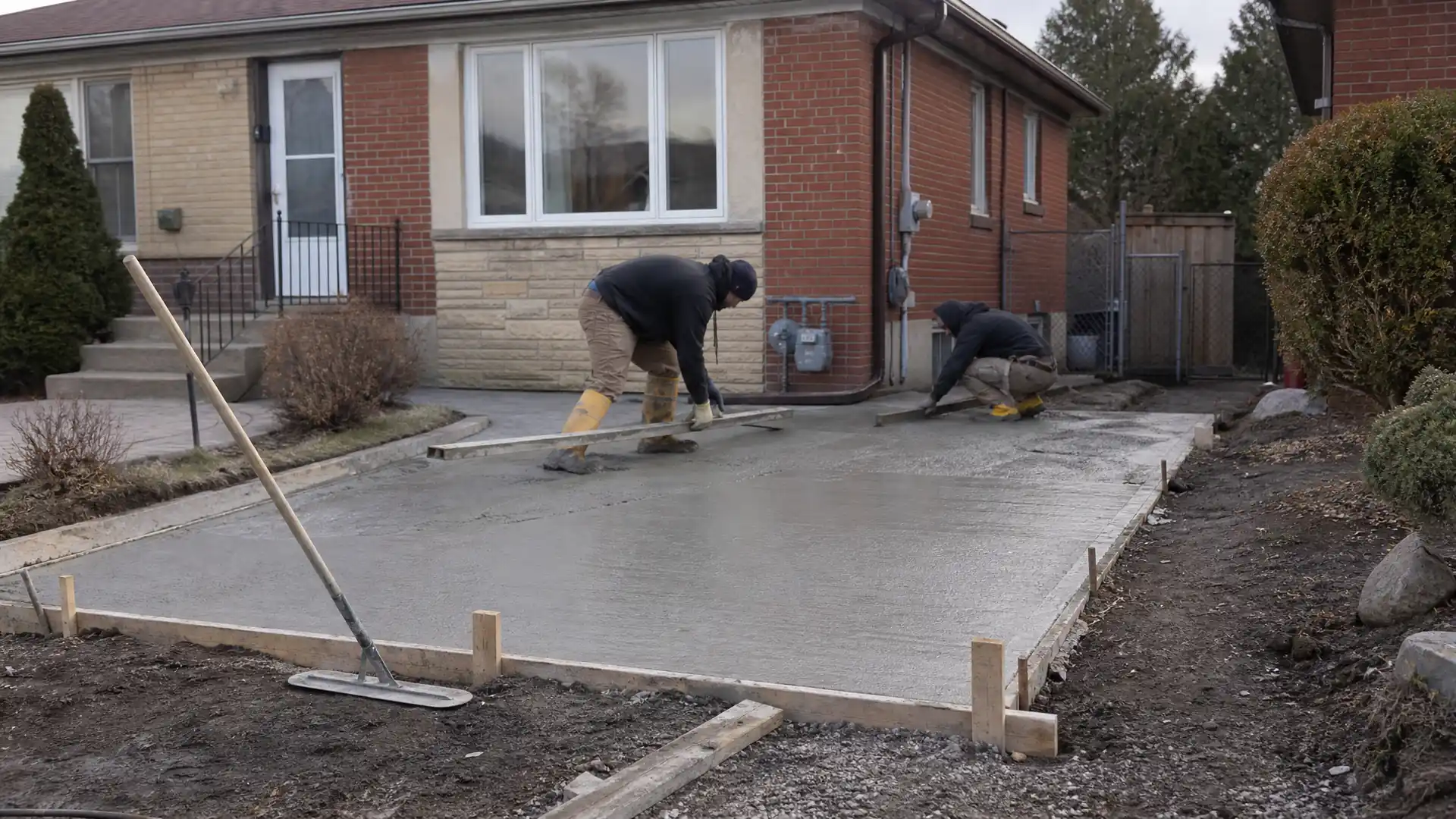
No photographs in this set yet.
Questions homeowners ask about concrete
That is scaling. It usually means the mix had no proper air entrainment, the surface was finished while bleed water sat on it, or salt was used before the slab had cured. New concrete should get through its first winter with no salt.
No. Concrete shrinks as it cures and will crack somewhere, which is what control joints are for. A hairline crack following a joint is doing its job. Watch cracks that keep widening, that sit at different heights across the gap, or that are wet.
In this city, yes, once the slab has cured. A penetrating sealer slows the rate at which salty water soaks in, and that soaking does the damage. It will not rescue a surface that is already scaling.
Concrete gains most of its strength in the first month and keeps gaining after that. Foot traffic first, then light vehicles, then normal use. We give you the dates for your pour based on the mix and the weather.
Get a free quote
Send a photo of the slab or the wall, and tell us where water goes in a heavy rain.
Talk to us
Tell us the address, what the problem is and when you would like the work done, and we will come back to you with a written quote. If it is easier to talk it through, the phone is the fastest route.
Standing water or a broken driveway?
We look at what is under the slab before anyone talks about replacing the top.