


Shingle and flat roofing
Asphalt shingle roofs, and the flat and low slope roofs over the additions, porches and rear extensions on so many Toronto semis.
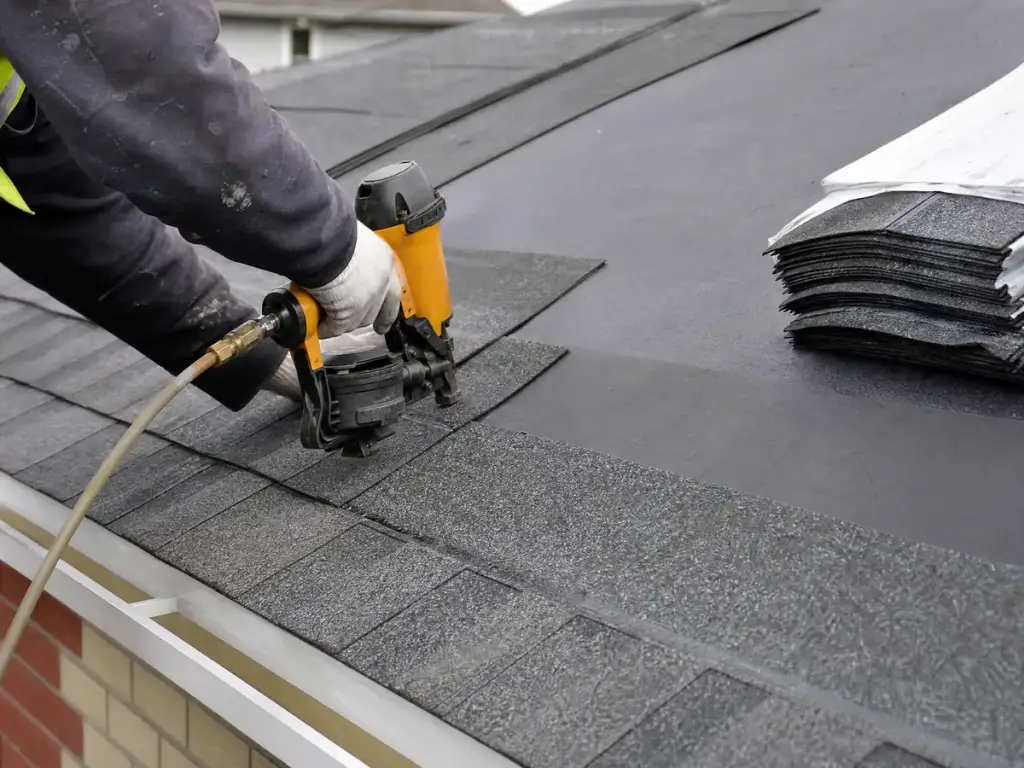
Two kinds of roof, two different failures
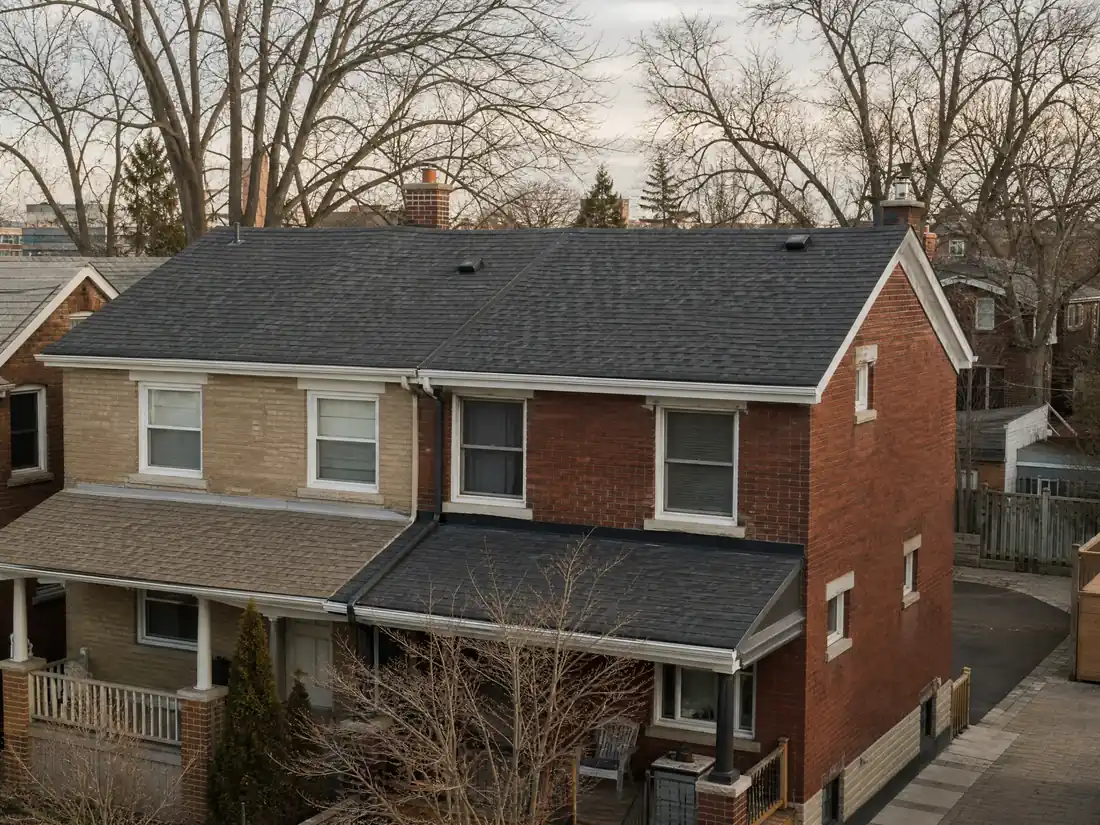
Most houses here carry both. A sloped front section in asphalt shingle, and a flat or low slope section over the back addition, the porch or a dormer. They fail in different ways.
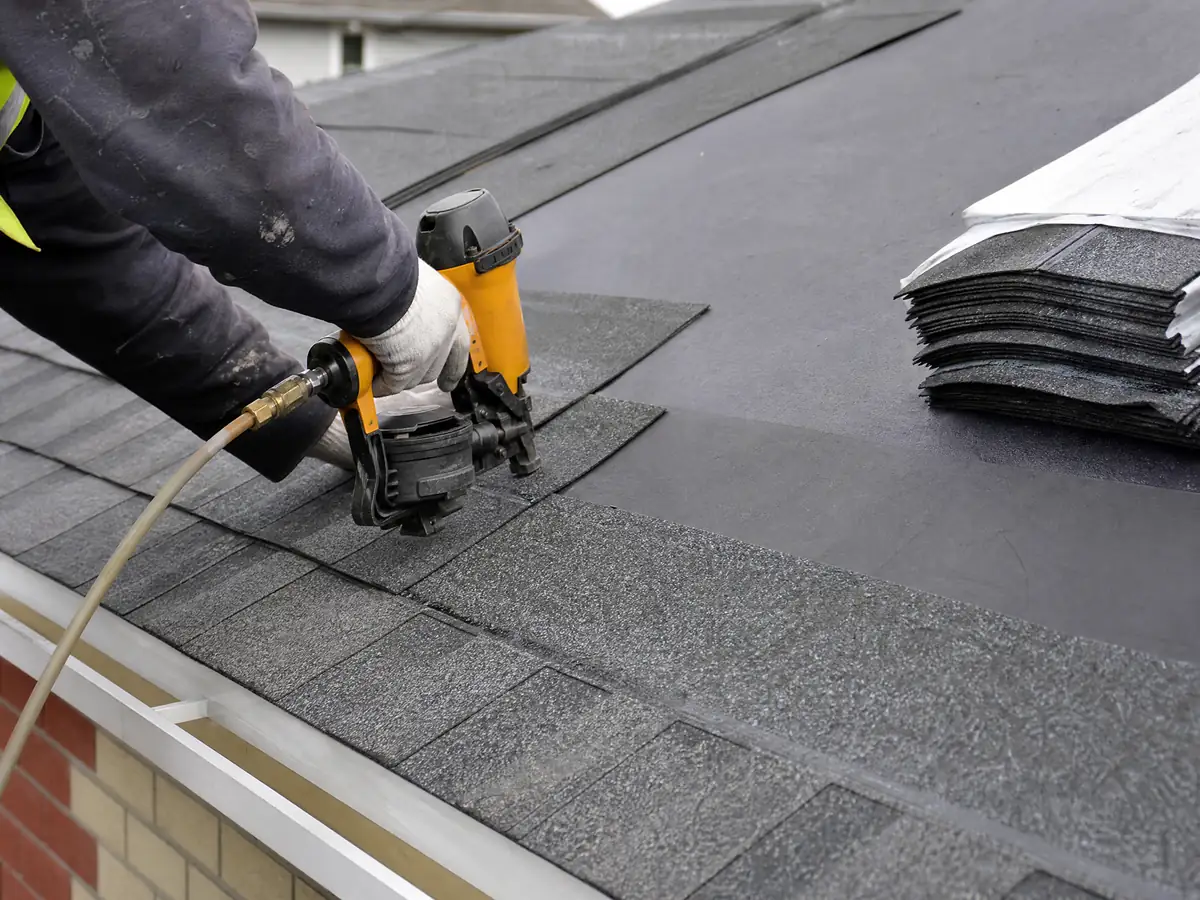
A shingle roof sheds water. It works through slope, through courses overlapping each other, and through the flashings at every change of plane. Nothing on it is waterproof by itself, which is why shingle roofs leak at their details long before the open field gives up.
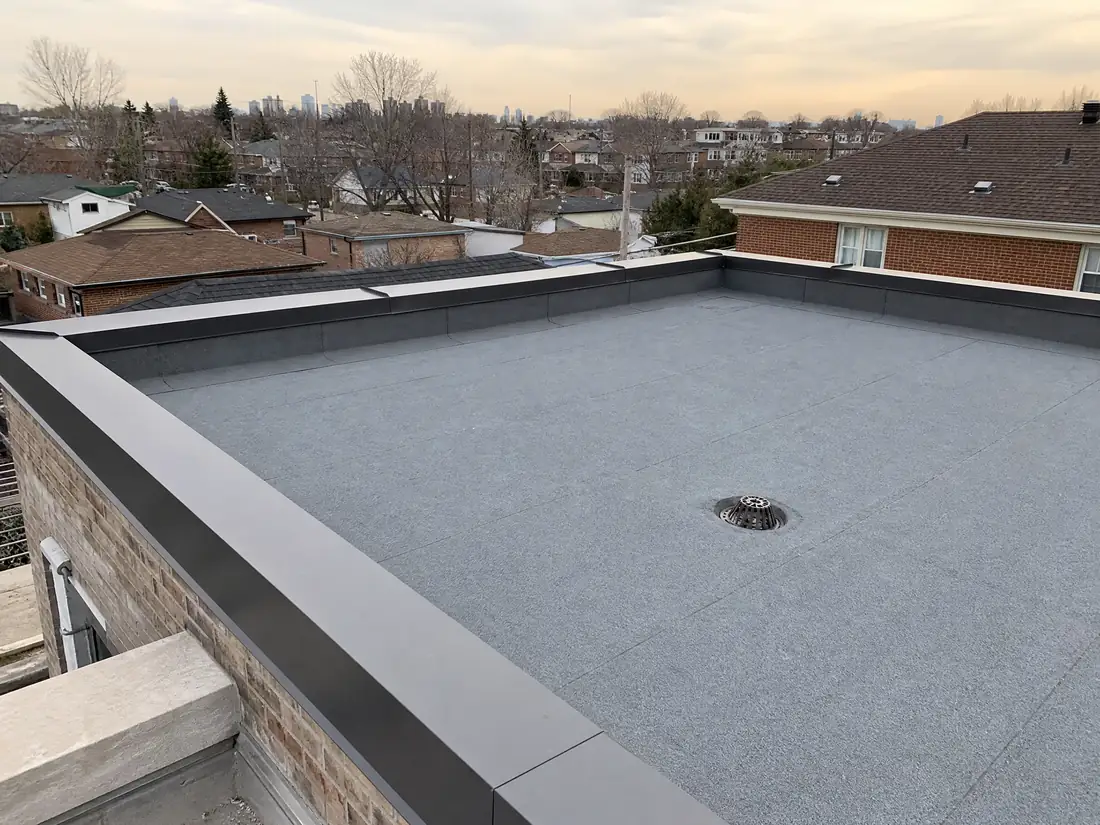
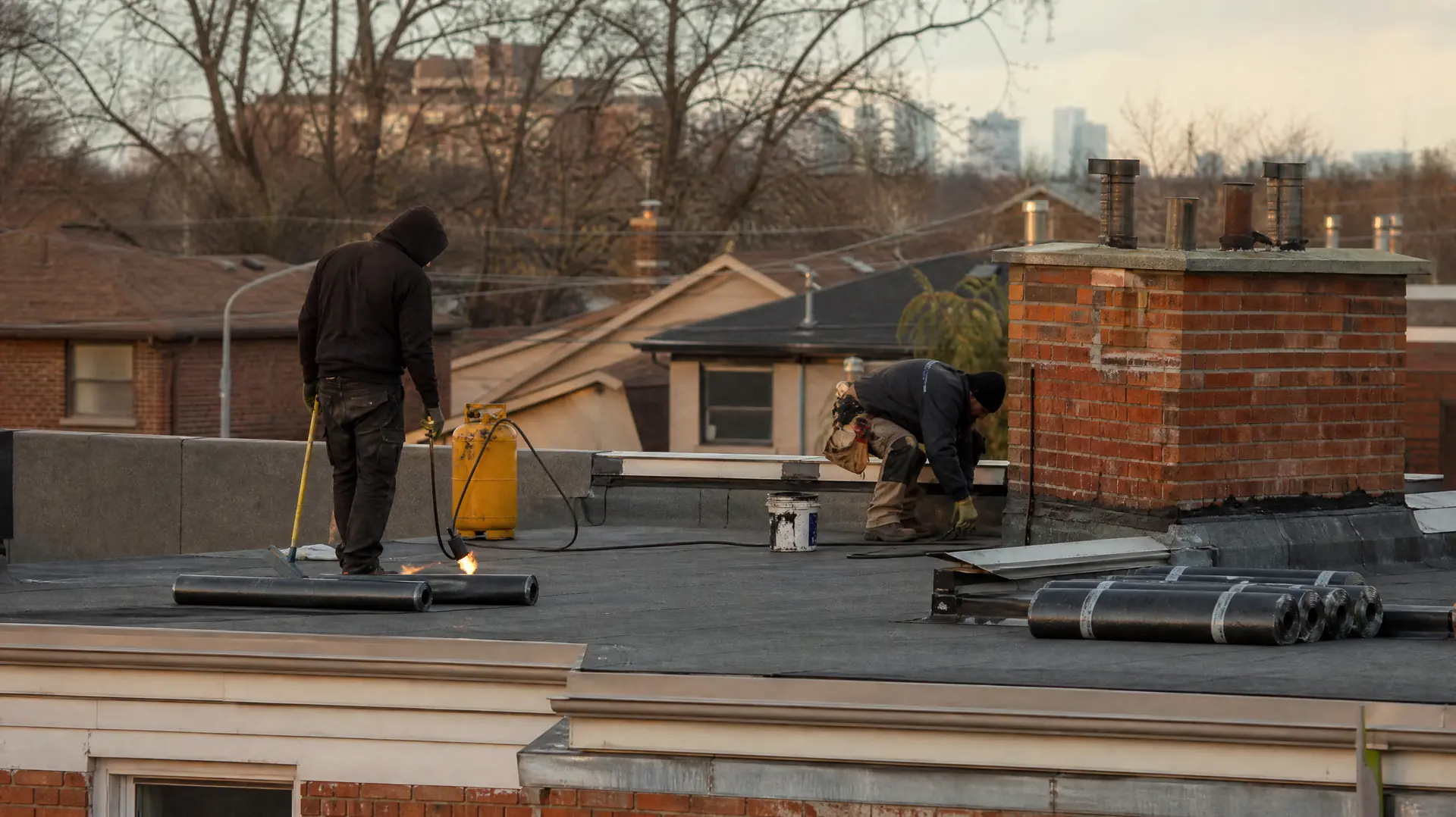
A flat roof has to hold water for a while, so it needs one continuous membrane instead of overlaps. Modified bitumen in plies, single ply sheet and built up systems all aim at the same result: an unbroken surface, sealed into every edge and penetration.
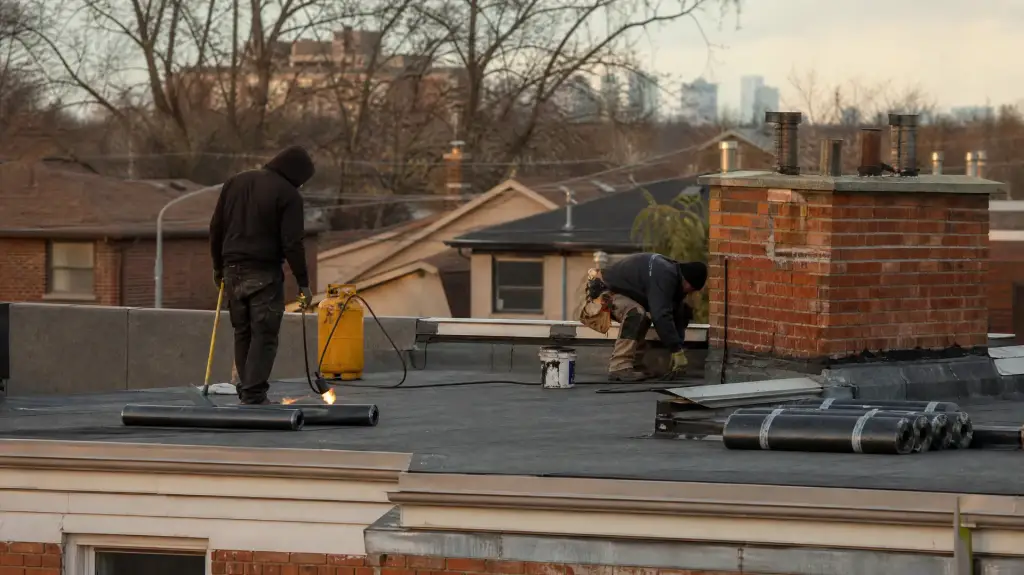
When a roof is telling you it is finished
Patching is right until it is not, and the change is usually visible from the ground or the attic hatch.
Wet insulation settles the argument on a flat roof. Once water is in the assembly it spreads sideways under the membrane and does not dry out.
- Water still ponding a day or two after the rain stops
- Blisters or ridges in the membrane, or laps that have opened
- The same spot repaired twice, or a leak that moves after each repair
- Insulation that feels soft or heavy underfoot
- Shingles losing granules, with grit collecting in the eavestrough
- Curled or cracked tabs, lifted shingles, and nail heads pushing through
- Daylight through the roof deck when you look up from the attic
- Ice building along the eaves, with water appearing inside at the wall
How we do a roof
Inspection, outside and in
We go over the roof, then go into the attic. Staining under the sheathing, rusted nail shanks and blocked soffits say what the surface never will.
Scope and materials
The system is written down: tear off or overlay, underlayment, ice and water membrane, ventilation, flashing details, and what happens at the eaves.
Protection and tear off
Ground protection goes down, tarps cover the landscaping, and the bin is placed with the neighbours in mind. The old roof comes off to the deck so soft boards show up.
Membrane, flashing and surface
Ice and water shield goes down at the eaves, through the valleys and around penetrations as this climate requires. Flashings, saddles and edge metal are lapped so water lands on the surface below it.
Venting, eaves and clean up
Intake and exhaust venting work as a pair. Eavestroughs are cleared or replaced, downspouts taken away from the foundation, and the property gone over with a magnet.
What roofing covers
Asphalt shingle roofs
Full and partial replacement, with the deck inspected once the old roof is off.
Flat and low slope roofs
Membrane systems over additions, rear extensions, porches and garages.
Flashing and valleys
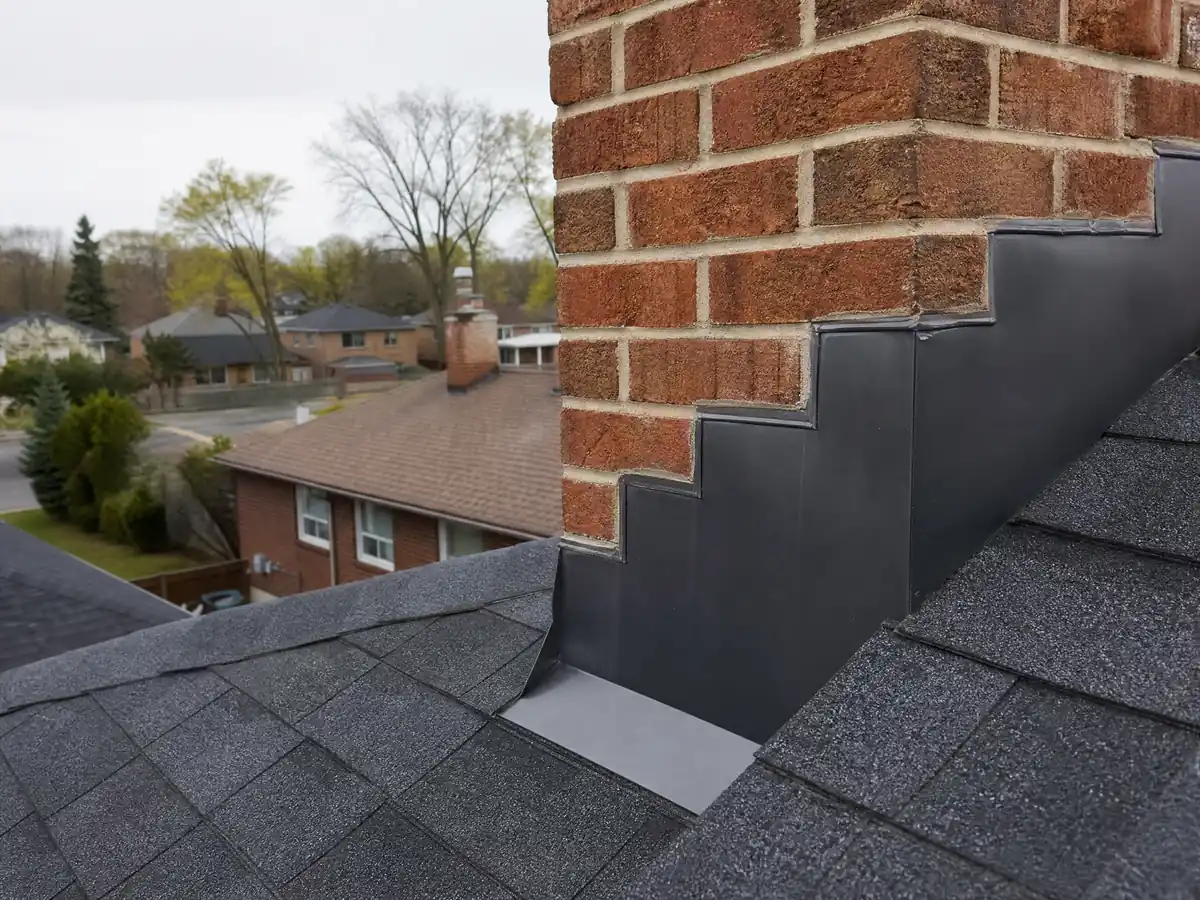
Wall and step flashing, valleys, skylight curbs and edge metal, where most roofs leak.
Chimney saddles
A cricket behind a wide chimney so water is split around the stack.
Attic ventilation
Soffit intake, ridge or roof exhaust, and baffles that keep the path open.
Ice and water shield
Membrane at the eaves and valleys, so water backing up behind ice meets something solid.
Deck replacement
Soft or rotted sheathing cut out before a new roof goes over it.
Eavestrough and downspouts
Trough, hangers and downspouts pitched, with the discharge taken from the wall.
What affects the cost of a roof
Area is the number everyone asks about first, and it is rarely the number that decides the work.
- Pitch and height. A walkable slope goes quickly. A steep roof, or a third storey, means staging.
- Layers coming off. Two or three old layers mean more tear off and more weight in the bin.
- Deck condition. Sheathing is judged once it is uncovered, so the amount to replace is never known from the ground.
- Detail count. Dormers, skylights, valleys, chimneys and stacks each need flashing, and details drive labour harder than open field.
- Access. A narrow shared drive or a rear lane changes how material reaches the roof.
Trades that meet the roof
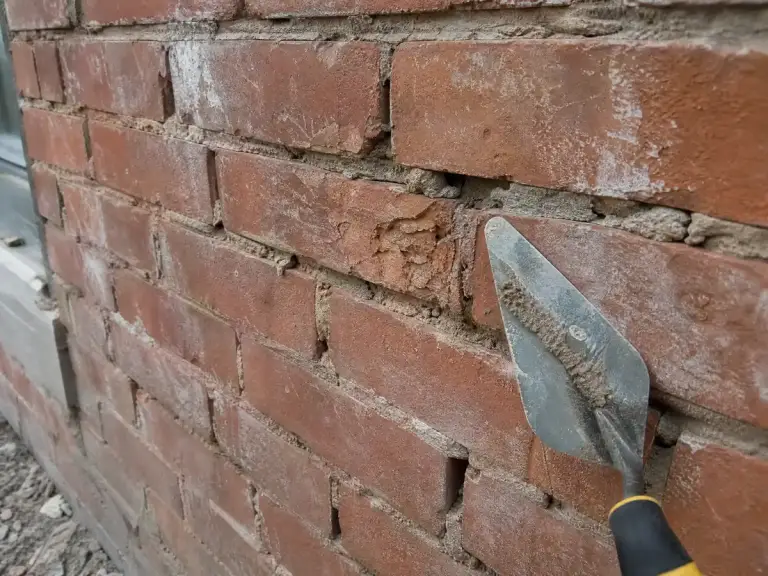
Brick
Chimneys, parapets and brickwork at a roof edge are masonry. A wet chimney often starts at the crown rather than the flashing.
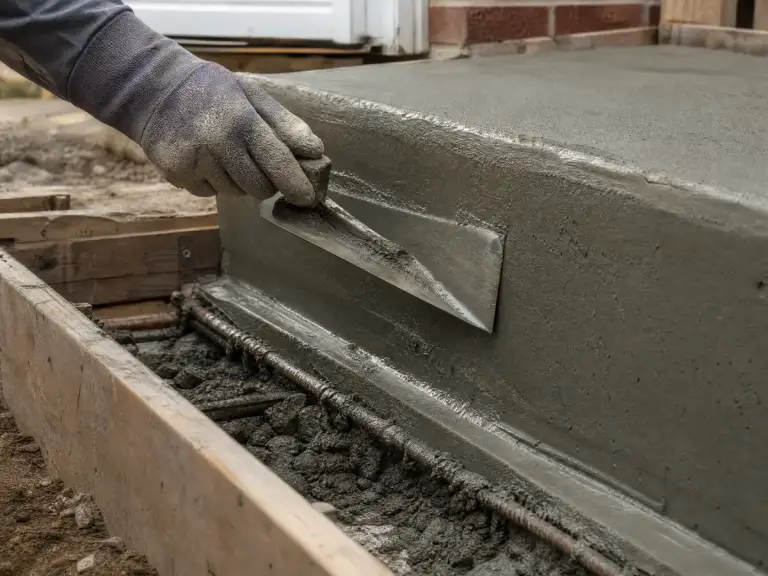
Concrete
Where the downspouts land, the surface underneath has to carry that water off instead of holding it at the wall.
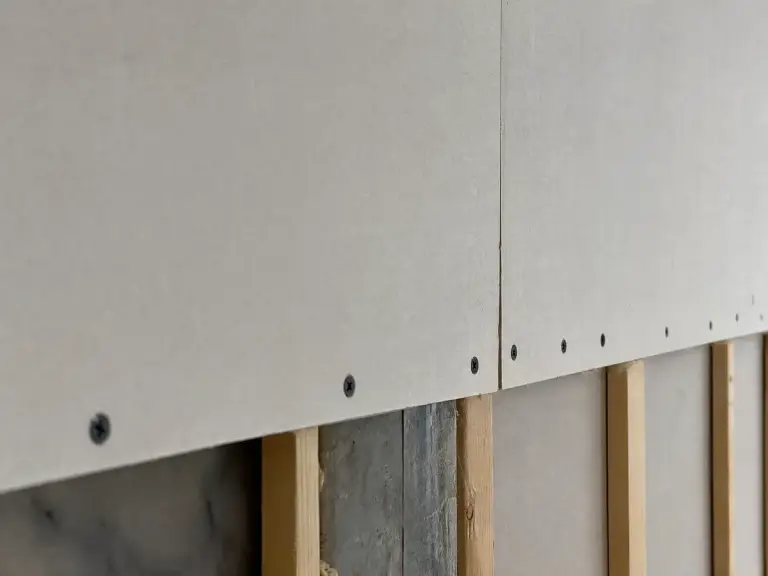
Drywall
Ceilings stained or sagging under a leak are cut out and made good once the roof is closed and dry.
Recent roofing work
A few from the gallery. Tap any photo to see it larger.
No photographs in this set yet.
Questions homeowners ask about roofs
Heat escaping into the attic melts snow on the upper roof. The water runs down to the cold eave and freezes there. That ridge of ice holds the next meltwater back until it works under the shingles. The cure is air sealing, insulation and venting.
Sometimes, and it is seldom the better choice. An overlay hides the deck, so soft sheathing stays soft, the new shingles sit on an uneven base, and the assembly runs hotter. Tearing off tells you what you have.
Because the membrane is a single surface and water travels underneath it. The wet spot on your ceiling is often far from where water enters, and once the insulation there is saturated, sealing the top does nothing. If the rest is sound and dry, a repair is honest work.
Usually less than the lifespan printed on the bundle. Our summers cook a roof and our winters work it the other way, and a south facing slope ages faster than a north facing one. Ventilation is the biggest factor you control.
Get a free quote
Tell us where the water shows up inside and what sits on the roof above that spot.
Talk to us
Tell us the address, what the problem is and when you would like the work done, and we will come back to you with a written quote. If it is easier to talk it through, the phone is the fastest route.
Leak, ponding or lifted shingles?
We will tell you whether this is a repair or the end of the roof, and why.