


Brick masonry and repointing
Mortar joints, spalled brick, chimneys and lintels on Toronto’s older brick houses, repaired to match what is already on the wall.
Brick is a drainage system, not a waterproof one
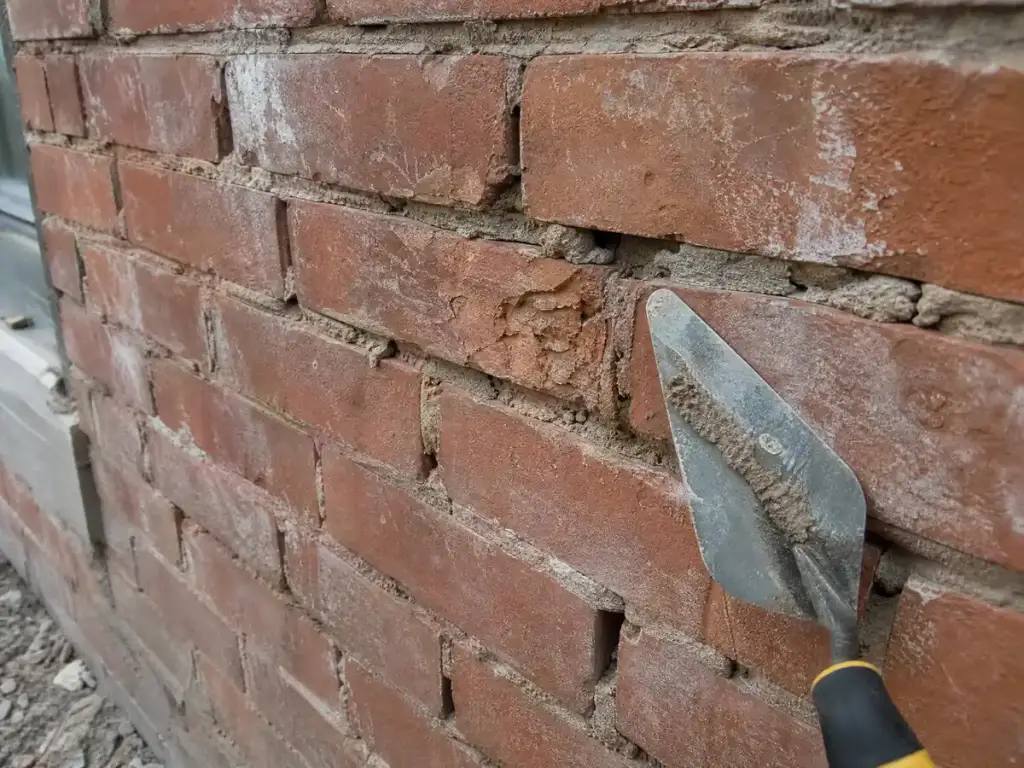
A solid brick wall is built to get wet. Rain soaks into the face and the wall dries out again from both sides. The mortar is the part meant to wear, and it should be softer than the brick.
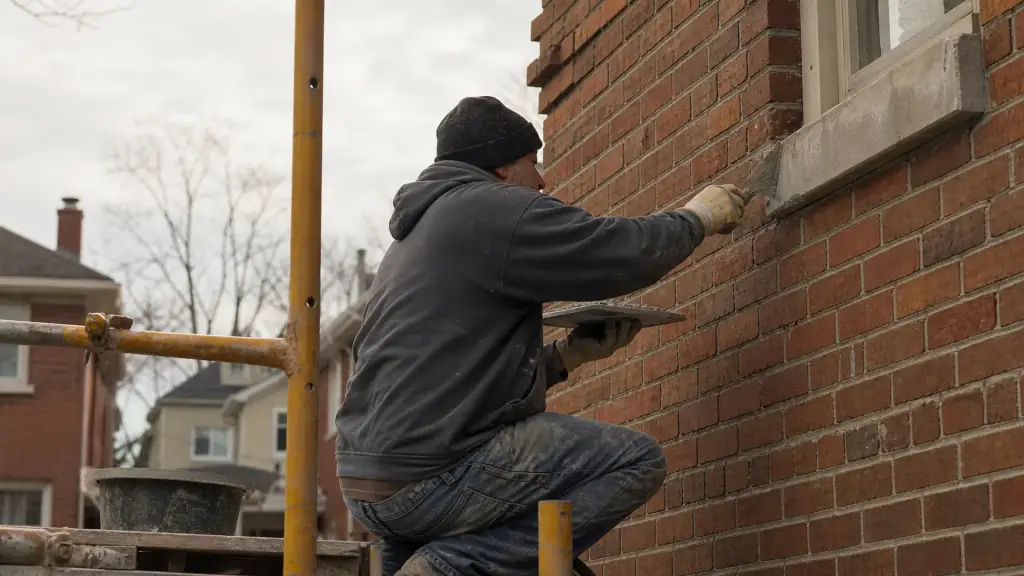
That is what repointing is for. Failed mortar is cut out of the joint, replaced in packed layers, then tooled back to the original profile. Cut properly, the joint is raked to about two and a half times its width, deep enough for the new mortar to key in.
The mix matters. Much of the older brick here was laid in soft lime mortar, and refilling those joints with a hard portland mix traps water and drives the damage into the brick face.
What a failing wall looks like from the ground
You do not need a ladder for most of this. Stand back from the elevation, then run a key along a few joints on the south and west faces.
Two signs below matter more than the rest. Spalling means water is already inside the brick and freezing there. A corroding lintel is worse, because rusting steel swells and lifts the brickwork on it.
- Mortar that crumbles to sand under a key
- Joints receded behind the face of the brick, leaving a shadow line
- Brick faces flaking or shedding in layers, usually near grade and under sills
- A chalky white bloom that returns after you brush it off
- Stair step cracking running through several courses
- Rust staining or a swollen steel angle over a window or garage opening
- Damp inside that lines up with an open joint outside
How we do brick repair
Survey and sounding
We work the elevation, tap suspect units for hollow sounds, test joints for depth, and find what feeds the damage: a blocked downspout, a failed sill, a missing cap.
Set up and protection
Scaffold or a lift where the work is out of reach, sheeting over windows and plants, and an agreement on how we work at a party wall.
Cut out
Joints are ground and chiselled to depth without chewing the edges of the brick, and failed units come out whole rather than broken in place.
Rebuild and repoint
New brick is bedded on full beds and lined through with the courses around it. Mortar goes in layered, pressed firm, then tooled to the existing profile.
Cure and clean down
Fresh mortar is kept damp and shaded in hot weather so it cures rather than dries. The wall is brushed down and the site cleared.
What brick work covers
Repointing
Part elevations, full elevations, parapets and the stacks above the roof line.
Brick replacement
Spalled, cracked and badly patched units replaced with the closest match available.
Chimney work
Rebuilding above the roof line, recasting the crown, resetting the cap, sorting flashing.
Lintels and steel angles
Corroded steel supported, cleaned or replaced, with the brickwork rebuilt on it.
Crack repair
Stair step and vertical cracks, stitched or rebuilt once the movement has stopped.
Sills and arches
Failed sills, soldier courses and arches reset so water leaves the wall.
Parged and painted brick
Parged faces made good, and a straight answer on paint, which stops a wall drying.
Efflorescence
The salt bloom cleaned off and the water path producing it closed.
What affects the cost of brick work
Brick is priced by the wall, not by the house. Two elevations of the same size can be a week apart in labour.
- Joint condition. A light rake goes quickly. Joints gone soft to the back of the brick do not.
- Matching. Reclaimed and discontinued units take sourcing, and Imperial brick will not sit in a metric course.
- Height. A chimney or third storey gable needs staging before a joint is touched.
- Mortar spec. A colour matched lime mix takes testing and careful tooling.
- Hidden structure. Once a lintel or sill is out, needling and temporary support can join the job.
- How much at once. Half an elevation now and half later costs more than the whole face.
Work that often comes with it
Concrete
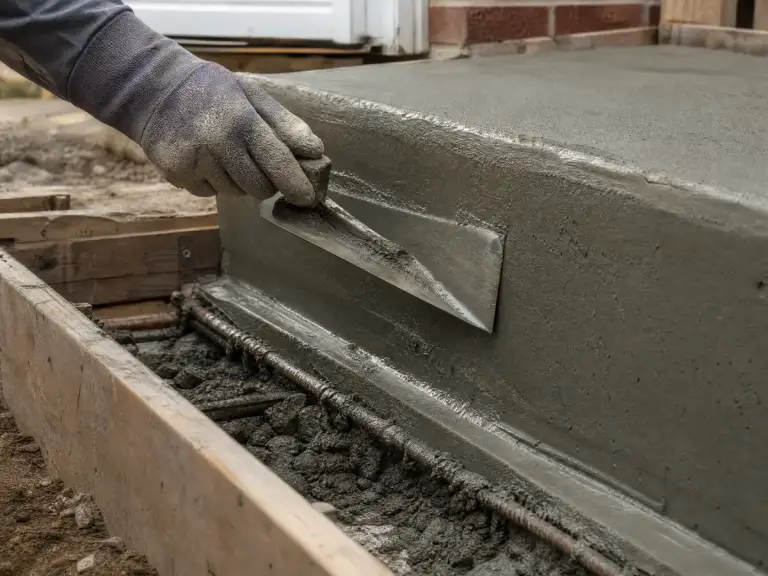
Damaged brick near grade usually has a wet source at the bottom of the wall. A slab pitched the wrong way keeps feeding it.
Blocks
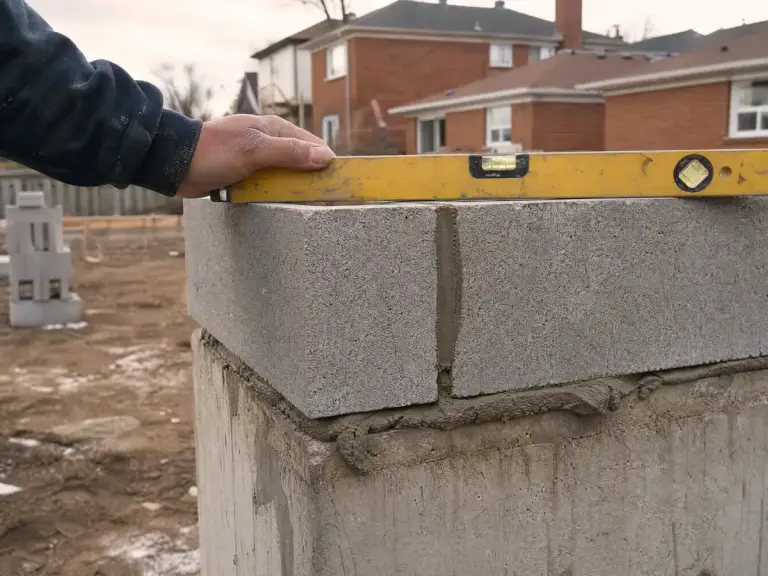
Below the brick there is very often block. It is laid, reinforced and repaired differently.
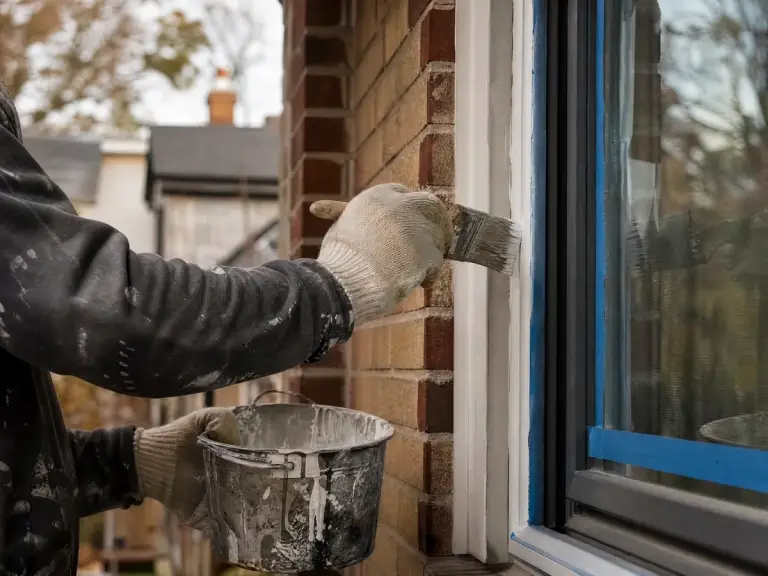
Painting
Interior walls stained by a leak need making good afterwards. That waits until the masonry outside is closed and dry.
Recent brick work
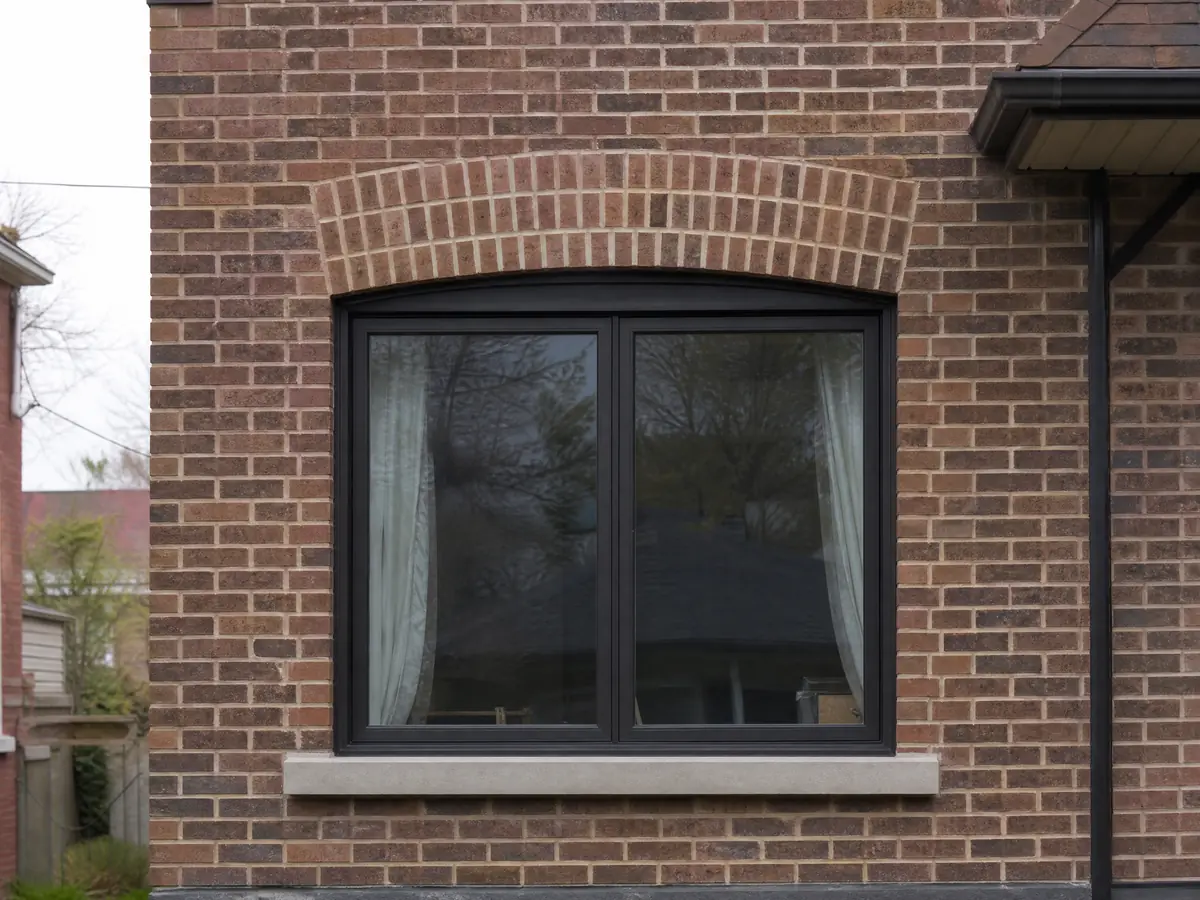
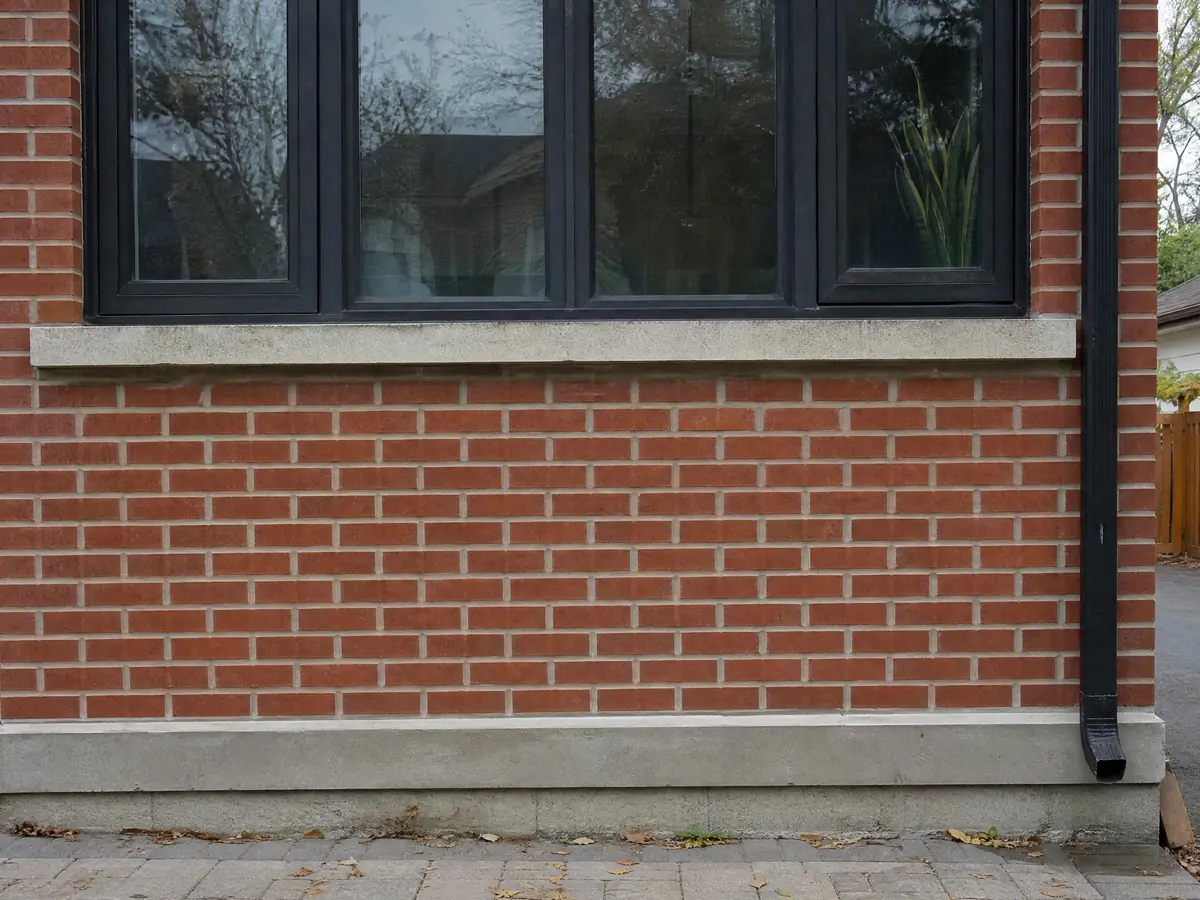
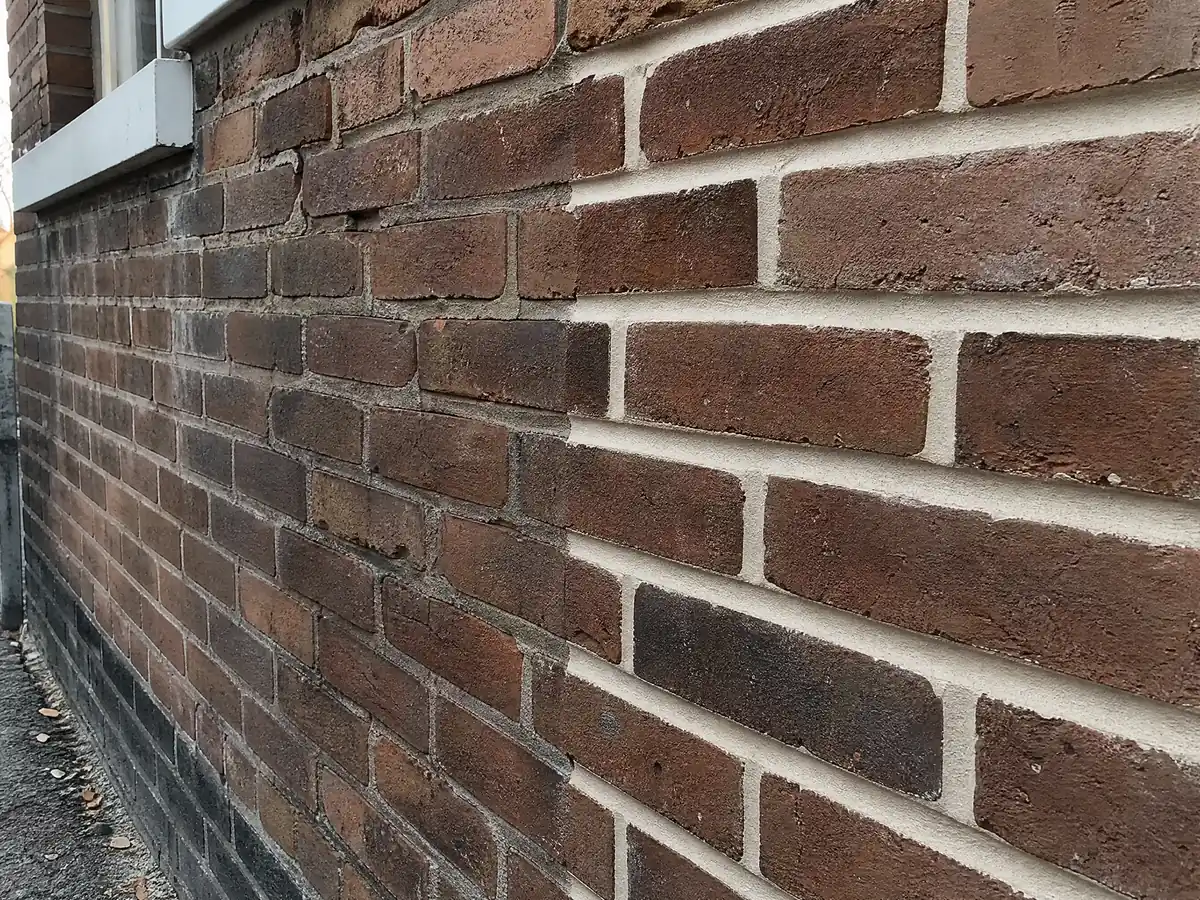
A few from the gallery. Tap any photo to see it larger.
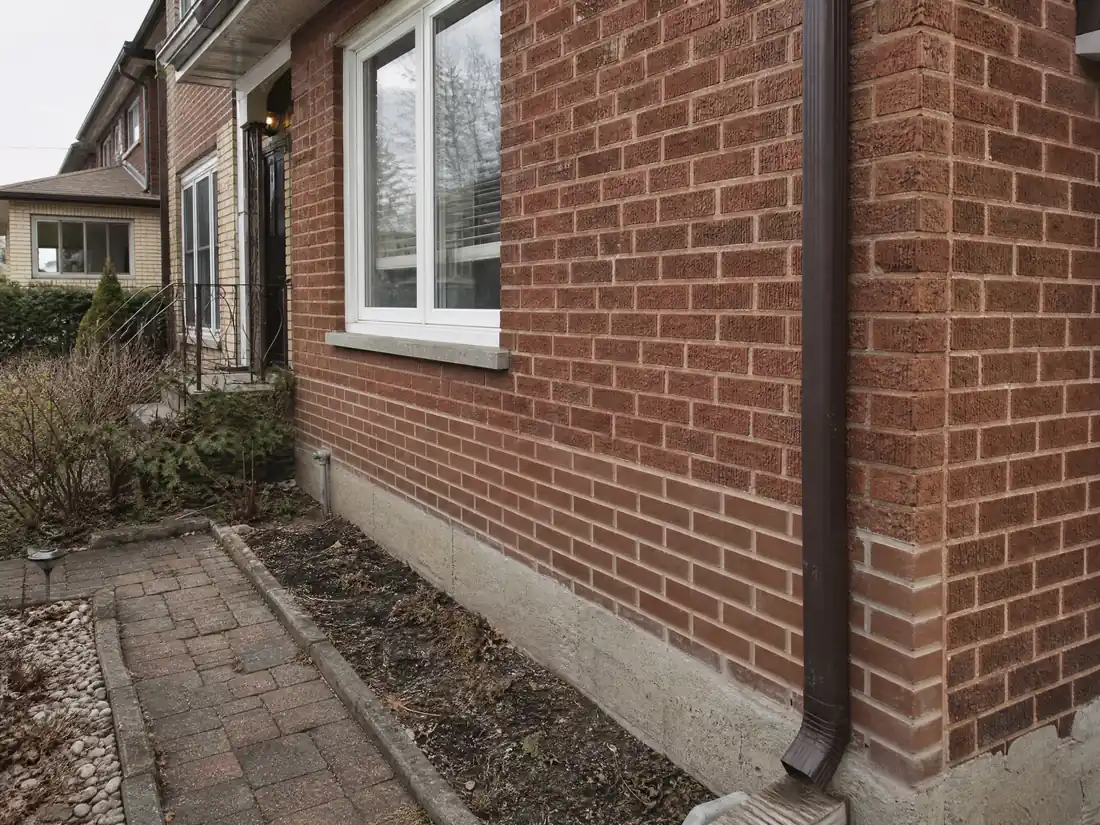
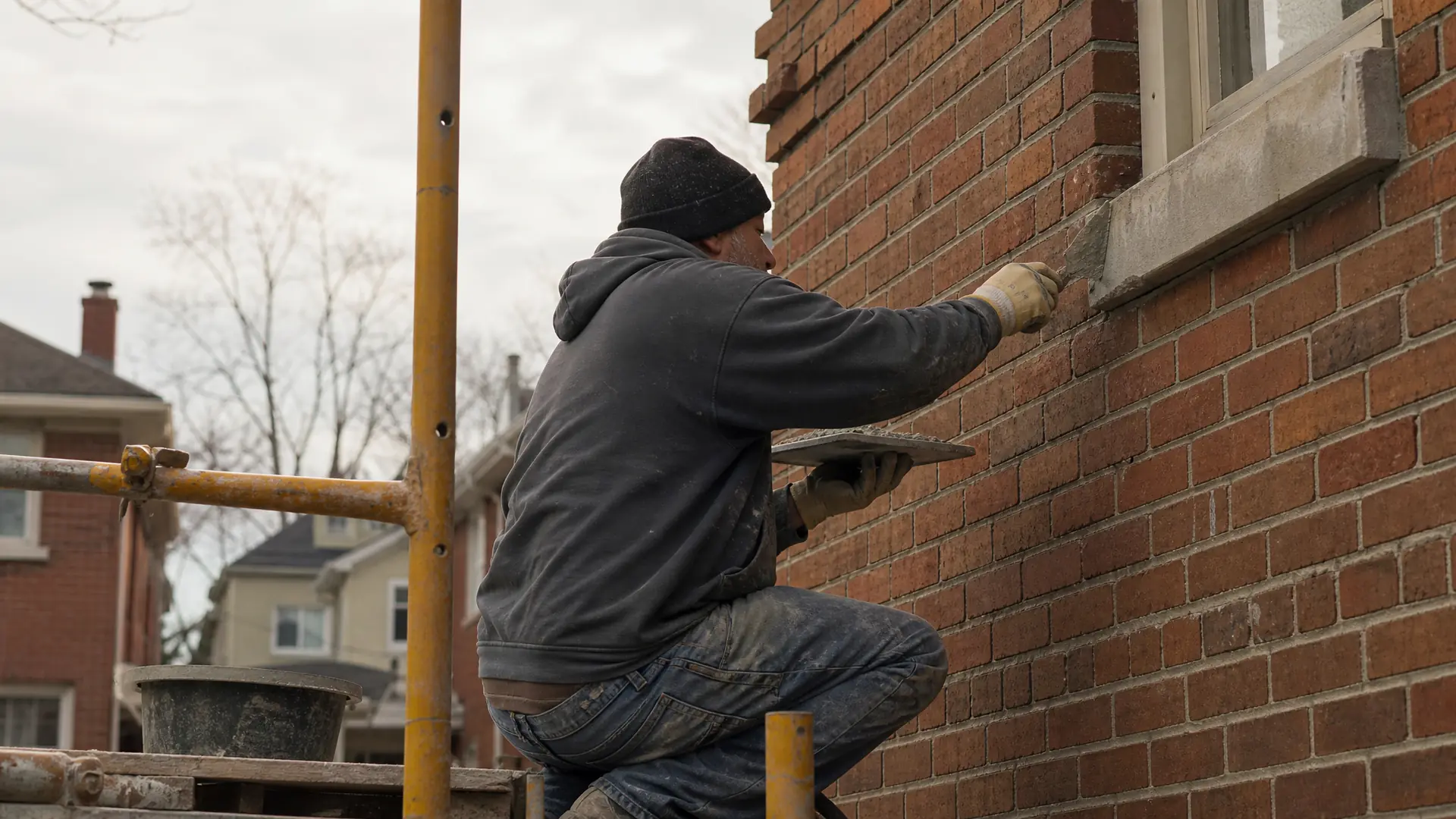
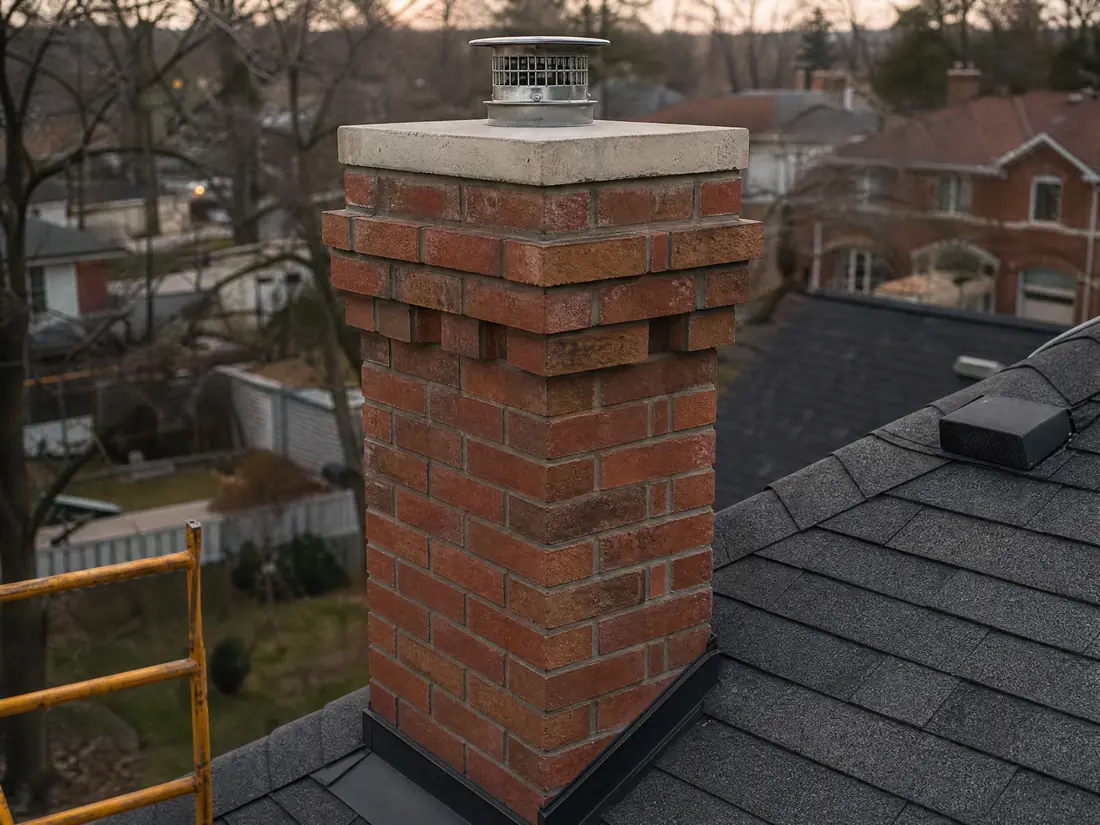
No photographs in this set yet.
Questions homeowners ask about brick
In everyday use people mean the same job. Strictly, repointing replaces failed mortar in the joint, while tuckpointing lays a mortar coloured to match the brick and sets a fine contrasting line into it. Nearly every residential job here is repointing.
It depends on the mix, the exposure and how water is managed around it. A well tooled joint kept out of standing water runs for decades. The same joint under a leaking sill goes far sooner, and south and west faces fail first.
Usually close, sometimes exact. Older brick here was made locally in sizes no longer produced, and colour varied inside a single batch. Where no good match exists, we take sound brick from a hidden elevation for the visible repair.
Generally, no. Paint and film forming sealers stop a wall drying outward, so water behind them freezes there, and painted brick often spalls under the film. If yours is already painted, you either maintain the coating or have it taken off carefully.
Get a free quote
Send one photo of the wall from a few paces back and one close up of the worst joint.
Talk to us
Tell us the address, what the problem is and when you would like the work done, and we will come back to you with a written quote. If it is easier to talk it through, the phone is the fastest route.
Crumbling mortar or flaking brick?
Have it looked at before the next freeze takes another layer off the wall.