


Masonry, concrete, block and roofing
Exterior and structural work on houses across Toronto and the GTA, from a base in Etobicoke.
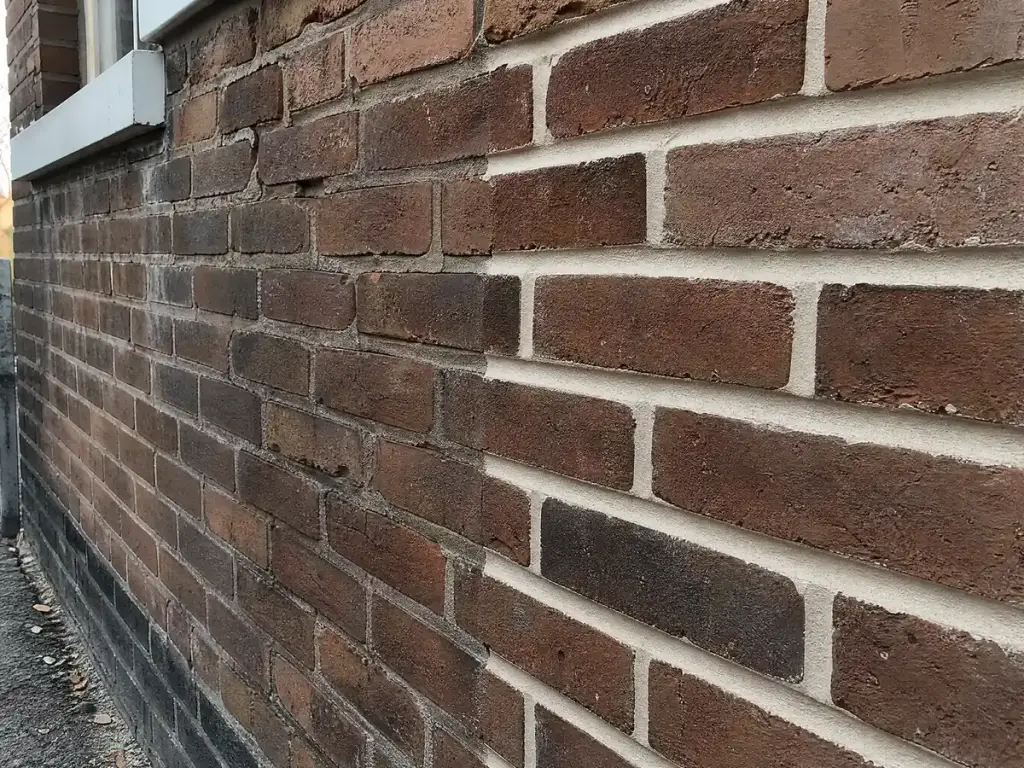
Exterior work, and why this city is hard on it
Every trade here deals with the parts of a house that carry weight or shed water: brick and block walls, concrete slabs and footings, and the roof above them. When one lets go, the damage does not stay outside for long.
Toronto is hard on those materials for one reason. Water soaks in, freezes, expands and pushes the material apart from the inside. That happens every time the temperature crosses zero, dozens of times a winter. Road salt makes it worse by pulling moisture into the surface.
Older housing stock compounds it. Many of these houses went up before flashing, membranes and drainage layers were standard, so a wall survives by drying out after every soaking. Exterior work here is maintenance on a cycle, and the cheapest version is catching a problem early.
Where your job fits
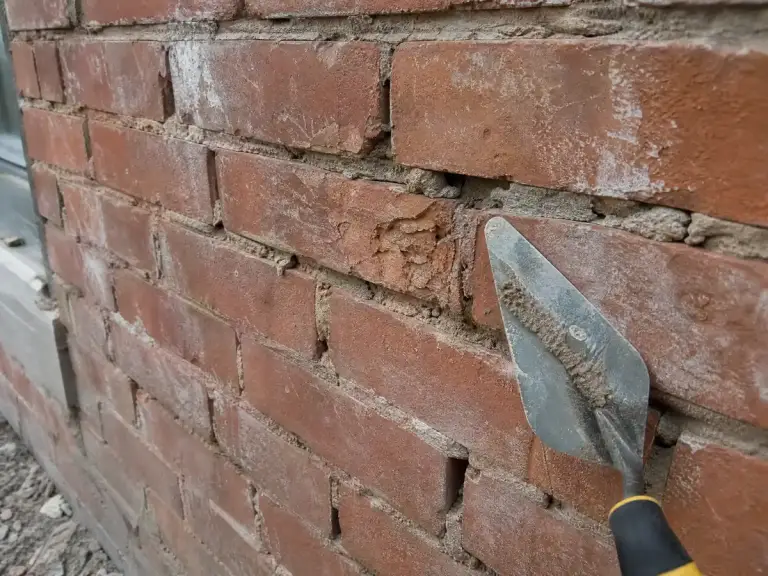
Brick
Repointing failed joints, replacing spalled brick, chimney rebuilds and lintel repair. Most calls on an older house start here.
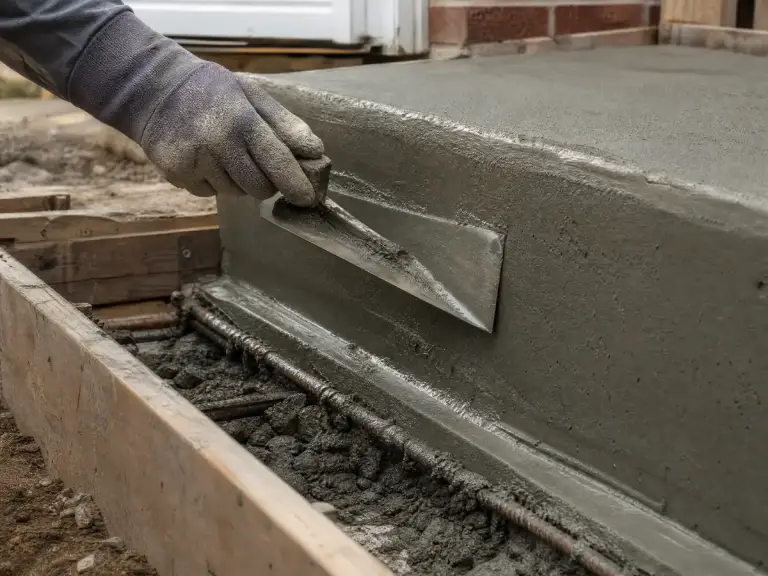
Concrete
Driveways, walkways, porches, steps, garage pads and foundation repair. Flatwork lives or dies on its base and its slope.
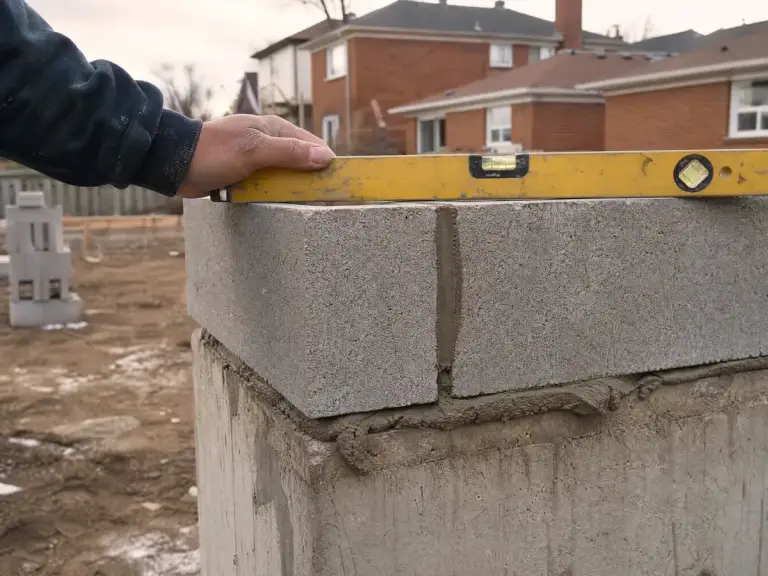
Blocks
Foundation walls, garage walls and retaining walls. What happens to the water behind a block wall decides how long it stands straight.
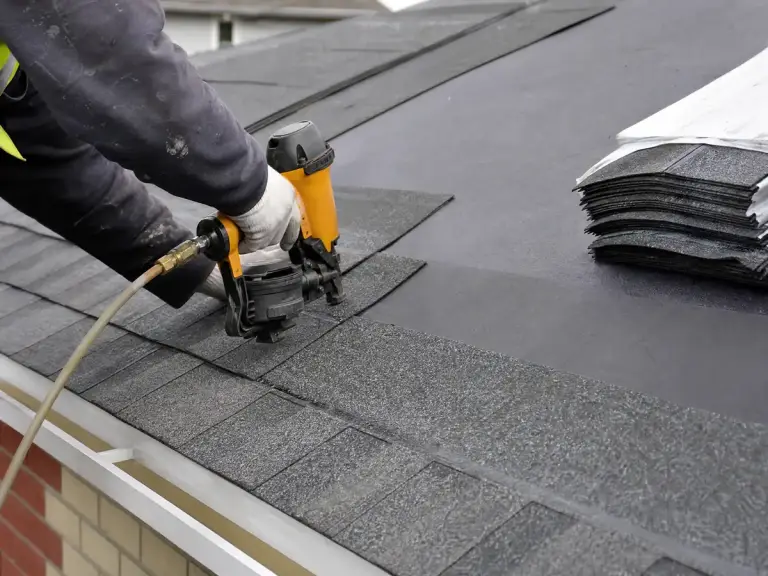
Roofing
Shingle roofs, plus the flat and low slope sections over additions, porches and rear extensions. Two roofs, two different jobs.
How an exterior job runs, first look to clean up
First look
We look at the damage, then at what is feeding it. A damp basement wall is often a downspout or grading problem before it is a foundation problem.
Written scope
You get the job in writing: what comes out, what goes back, which materials go in. Anything judged only once the wall is open is named as an unknown.
Permits and access
Where the city wants a permit or an inspection, that is arranged before work starts. We confirm parking, material storage and how the work gets reached.
Protection and removal
Windows, plants, walkways and a neighbour’s side of a shared wall get covered first. Removal is where the real condition of the structure shows up.
Rebuild and clean up
New work goes in, then the site is swept, washed down and cleared. We walk the finished job with you before we leave.
What makes exterior work cost more or less
There is no useful average here. Two houses on the same street can need very different jobs. This is what moves the number.
- How much of the wall or surface is involved. One failed section is not a whole elevation.
- Access and height. Scaffolding, a lift or a tight side yard adds days before anything starts.
- Matching. Brick, stone or shingle that sits quietly beside the original takes longer to source.
- What removal uncovers. Rusted lintels, soft sheathing and missing footings are the usual surprises.
- Season. Mortar and concrete have temperature limits, so late autumn work may need heat and blankets.
- Disposal. Masonry and roof tear off are heavy, and bin volume follows whatever comes off.
Questions homeowners ask
Like for like repair usually does not. Structural change does: new openings, a new porch structure, anything that alters how load reaches the ground. We tell you which side of that line your job sits on.
Some of it. Roofing goes on in the cold with the right handling, though shingles need warmth to seal down. Mortar and concrete need temperatures above freezing to cure, so planned masonry sits better in the warmer months.
Yes, and they carry their own rules. A party wall or a shared chimney means the repair touches your neighbour’s property too. Talk to them early, because access from their side often decides how awkward the job becomes.
It depends how much has failed and why. A short run of loose brick is a repair. A wall gone soft across its face is a repointing job, and patching a quarter now means returning for the rest.
Often, because these trades overlap. A leak over a bay window can be flashing, a corroded lintel and open joints at once. Fix one, ignore the others, and you are back under the same wet ceiling next spring.
Get a free quote
Tell us what you are seeing and roughly when it started. A photo helps more than any description.
Talk to us
Tell us the address, what the problem is and when you would like the work done, and we will come back to you with a written quote. If it is easier to talk it through, the phone is the fastest route.
Not sure which trade you need?
Describe the problem and we will tell you what it is before we talk about fixing it.